Othman Kabbaj

.avif)

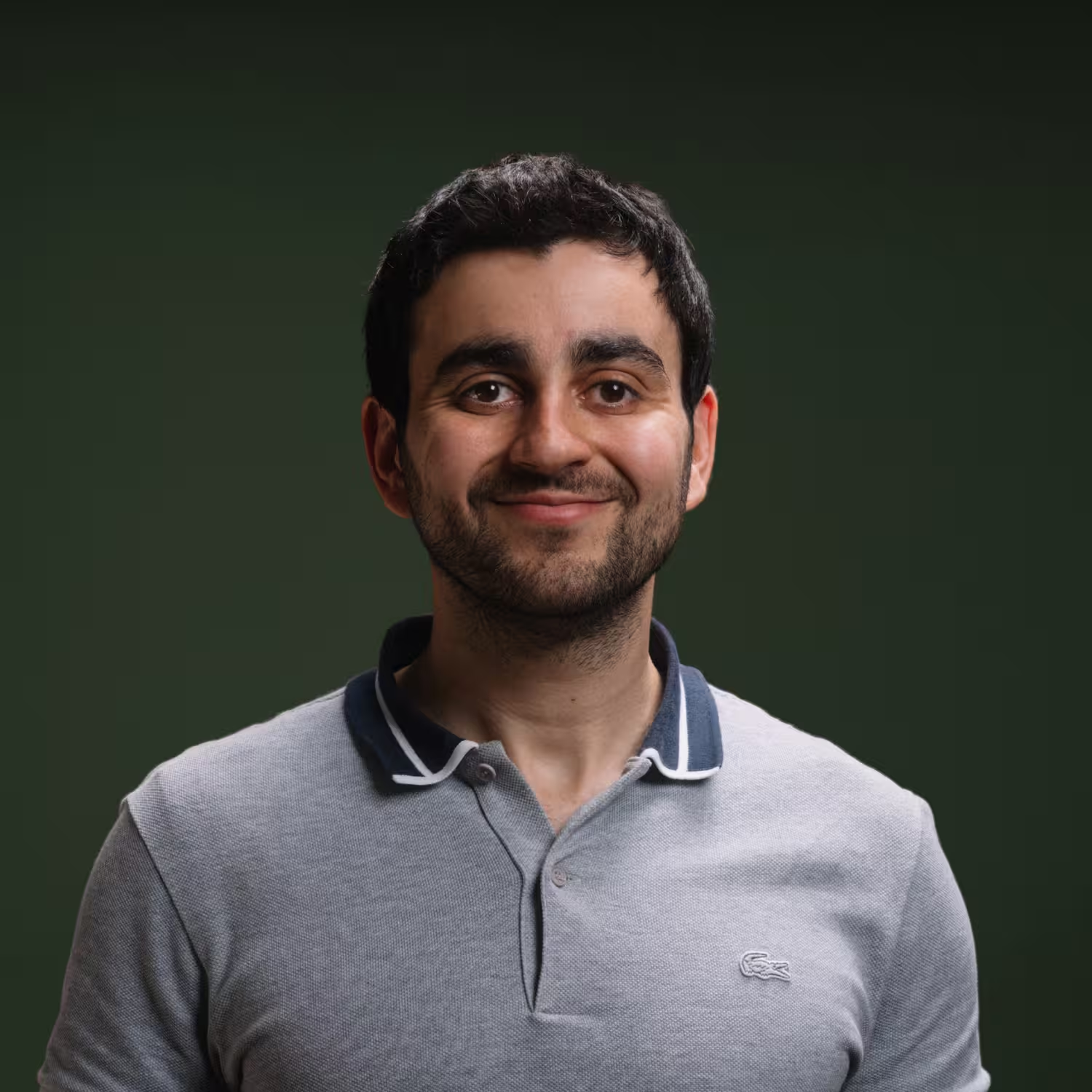
Othman grew up in Morocco believing that access to capital shapes whether communities grow or stall.
At McGill university in Canada, he led a 100+ person network helping students secure professional opportunities, and quadrupled placements in four years by systemizing operations and performance tracking. Early on, he learned that outcomes scale when processes are engineered.
He later worked in private equity in London, UK, reviewing transactions and seeing how capital was allocated at scale. Despite the depth of analysis, much of the work relied on fragmented documents, manual reviews, repetitive verification, and human bottlenecks. The system was resource-heavy, slow, and dependent on email and Excel.
What surprised him even more was lending. If equity investing, with high fees and concentrated teams, was operationally inefficient, small-business lending was even more so. Critical decisions were being made with less depth, less structure, and even more manual back-and-forth.
He launched his own advisory firm and scaled it to six-figure ARR, but the underlying problem remained unchanged: capital allocation workflows weren’t built for scale.
When large language models emerged, he saw the inflection point. Verification, underwriting checks, and borrower follow-ups could finally be automated and structured at intake.
He shut down a profitable consultancy, taught himself to code and build machine learning systems, and founded DueDeal, an AI workflow layer embedded directly into lenders’ inboxes and operating systems.
Today, the impact is measurable:
50% of customers have referred new lenders into the sales pipeline.
70% of verification issues are surfaced at initial review instead of late discovery.
Borrower response times have decreased by 50%, accelerating approvals and increasing file completeness.
DueDeal is rebuilding the infrastructure behind how capital moves.
EWOR helped me build my company and helped me think like the founder my company needed me to be. Being surrounded by founders who are building with the same intensity, the same sleepless energy, the same belief in their idea. You learn from their wins, their mistakes, their questions. Every conversation with a peer felt like a shortcut I didn't know existed. EWOR gave me the tools to build. The community gave me the fuel to keep going.
More from EWOR