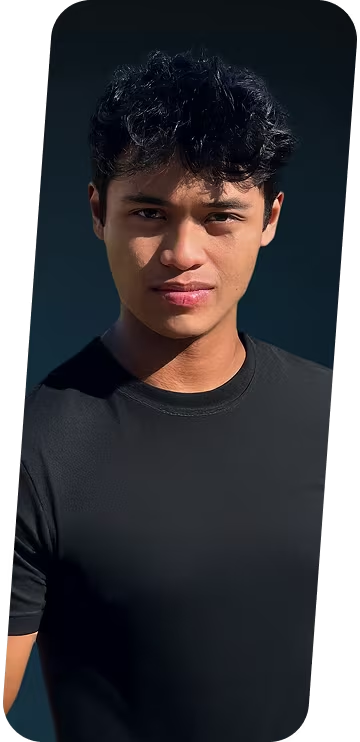
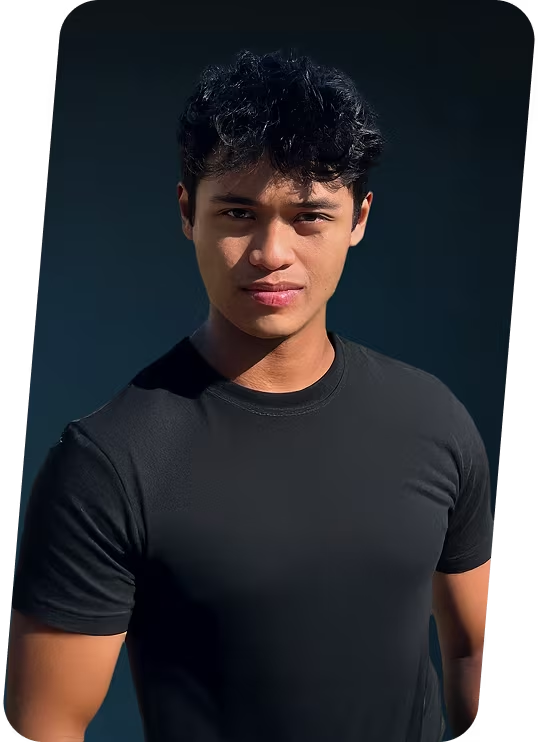
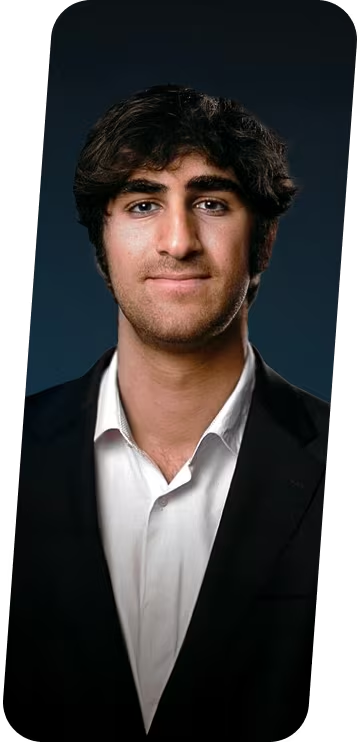
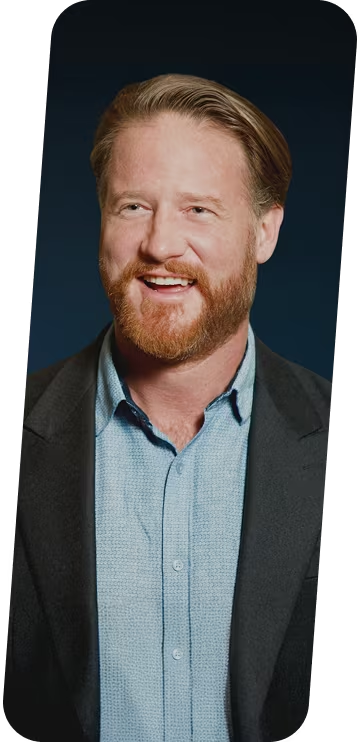
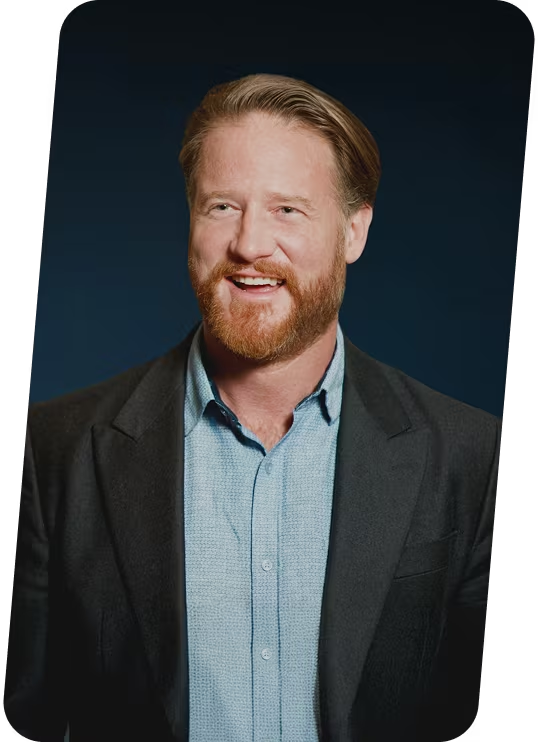
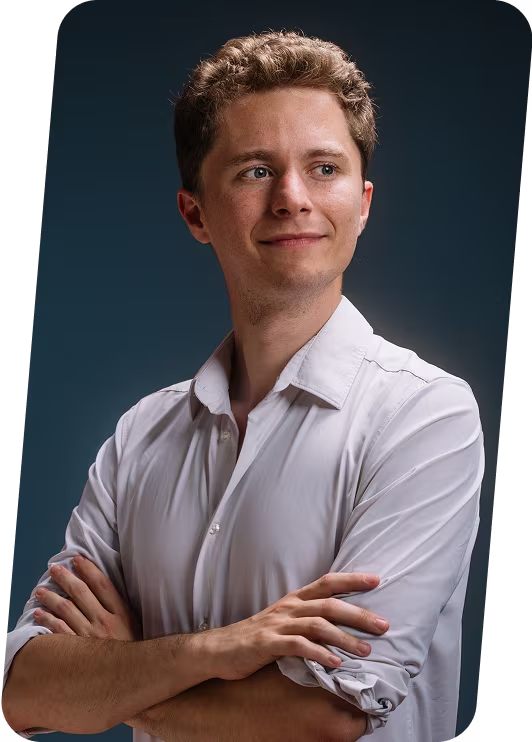
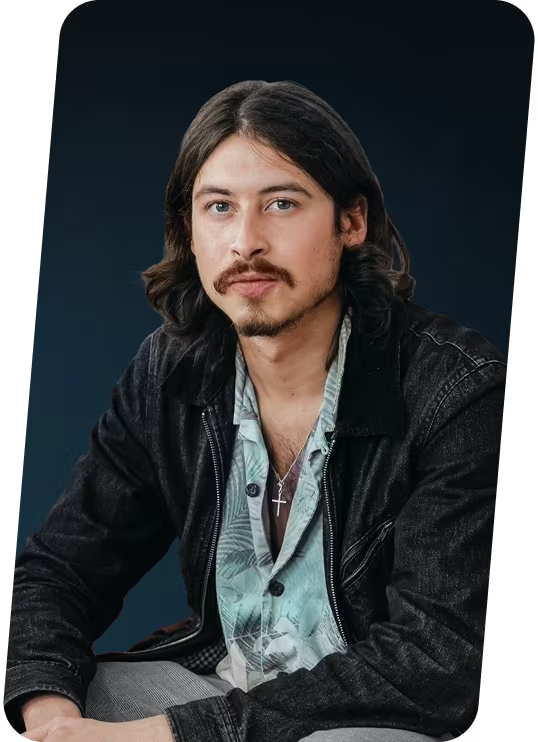
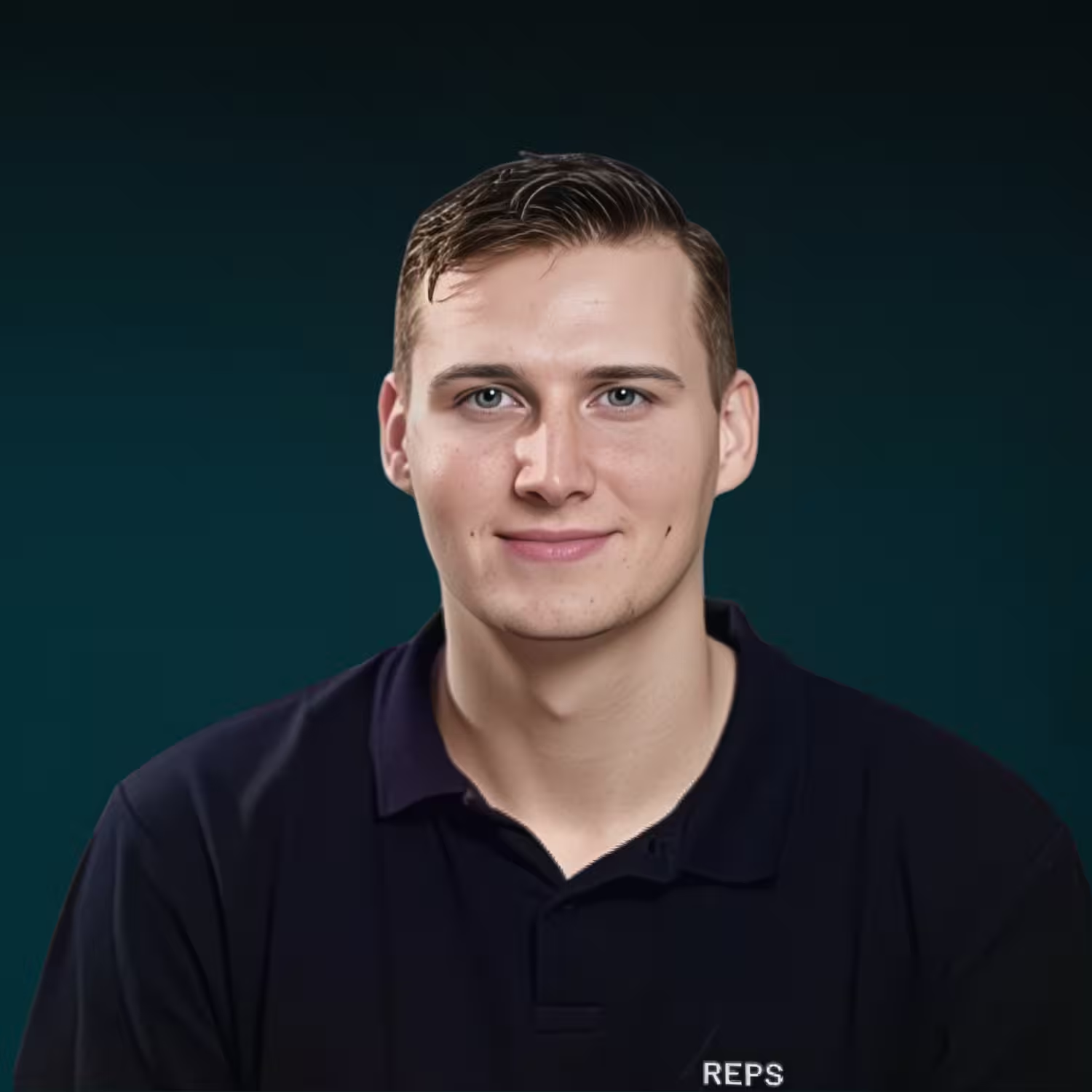
In this episode, Alfons Huber, Co-founder and CEO of REPS, talks with Daniel Dippold about what it actually took to protect his invention when the people he trusted most tried to steal it. Alfons invented energy harvesting technology 200x more efficient than anything on the market, with 90,000 trucks already driving over it at the Port of Hamburg. Getting there meant walking away from his degree after four university professors threatened to destroy his career if he didn't hand over his work. He left to start over in a 20 square meter lab with almost nothing on his bank account, ripped the motor out of his own washing machine to save €5,000 in research costs, and went two weeks without washing his clothes as a result. The people who tried to stop him were his role models. Succeeding required him telling them to fuck off in order to bring his invention to life.


Daniel Dippold: Welcome to Been There, Done That. A podcast we launched to talk about raw, unfiltered founder stories. We listen to so many podcasts ourselves, and we figured that most of them talk about success stories – after they happened. And facts and figures get distorted, plus strategies that worked 10 years ago don't work today anymore. We at EWOR wanted to launch something that tells raw, unfiltered founder stories today.
And we believe we're in a unique position to do this, because every year we support 35 founders to build $10B+ companies. We do that as founders ourselves. 40% of our full-time team have launched companies valued between 100 million and 10 billion. Therefore, we want to talk founder to founder with people on how they got from zero to a million ARR or from zero to a seed round.
I'm Daniel Dippold, and I'm the host. I'm not a professional host, but I'm a former techie, a mathematician, someone who's built tech ventures for the last 10 years. And I want to talk techie to techie, founder to founder, with people who have what it takes to create a 10 billion dollar company. And I want to uncover the specific things they did in order to achieve that. And I hope that I can help you with those examples to build your own companies.
You’re listening to Been There, Done That. Welcome to the show!
Daniel: In today's episode, I'm talking to Alfons from Tyrol. So forgive us for getting a little bit German in our accents or Austrian. You broke a record. You joined the [EWOR] Fellowship in September. And as we are recording this in March, you're already raising on a $277M valuation. You are building a street power plant as a former physicist. And you've been battling university professors and spin out processes throughout. So I would be super excited to go a little bit into this today. Alfons, so great to have you on the show.
Alfons: Thanks, Daniel. It's a real pleasure to be here today and have the opportunity to talk about REPS, our startup, and dive hopefully into the topic of energy harvesting.
Daniel: Yeah, I couldn't get more excited about an episode like this, right? Like we're going to talk about physics. We're going to talk about energy. We're going to talk about hacking startup success, right? And maybe you give us a little bit of a first glimpse into your personal story by introducing yourself and talking a little bit about the early days of your life as well. And then I'm going to, you know, jump in with a bunch of questions.
Alfons: So when I was 14 or 15 years old, I was fascinated by magnets. So my mother always tells me, she got me some small magnets when I was a young guy, now she always gives it to her nephews because she hopes they also play with magnets. So I was very fascinated by repulsion. So where is this force coming from, you don't see it! So, I was fascinated and I was ordering big magnets from Amazon, put it into my room and I was looking through the field lines, how does they look like? And my mother thought, I'm going crazy. So that was the first interest in magnets.
And at the age of 10 to 15, I played three sports at the same time: ice hockey, football, handball. And then I needed to decide, because my knees already got destroyed. So I needed to decide which sport I would choose. So I chose handball. I became a professional handball player. I earned my first money with it, signed the first contracts. And with 21, I needed to decide which path I would like to go. If I stay a professional handball player, I need to sacrifice this time, just for that to become the best one. Or if I, yes, follow my passion of physics. And that's what I did at the end and that's how it started.
Daniel: Yeah. Can you invite us a little bit into your thinking back when you were 21? What was going on in your head, choosing between physics and playing handball?
Alfons: Yes. So my biggest issue all my life in my handball career was I had five different trainers and I always had problems with trainers. So, of course, I was very young but I always thought we should make a different tactic. My knees hurt a lot at this time and I thought, no. I don't want to do this anymore. It's not worth for the time and effort I give to this sport. So at the same time I started studying physics and I was so fascinated about everything in physics. You know the mechanical world, the quantum world, the big world. So I realized if I really want to become the best here, or also learn a lot, I need to stop doing other things. So that's why I decided at the end to become a physicist.
Daniel: Focus is key, right?
Alfons: Yes, focus.
Daniel: Like I realized when I ended all side projects that I started after my first company and focused full time on one company only, right? Like all of the good things happened. So you already did that early in life, right? You studied physics then. Can you walk us a little bit through your research, your physics studies, the experiments you ran during that time?
Alfons: Yes, so the first semesters to be honest were a bit boring. So I knew a lot about physics because I started as I said, I trained it already. I was at home and I was fascinated by different fields. But when I joined the university professors, let's say 15% of all the lectures I have been there were very interesting. Most of them, I knew. So I already started in the first semesters to make courses then in the second semester, which is in the sixth semester and in the fourth semester, because I wanted to see if it's getting more interesting or not. So, I was a very weird student because I then finished my exams, for example, in particle physics in the fourth semester, but I was in the second semester. So that's how I jumped around just doing things which interests me
Daniel: Yeah, I mean, according to Plato, boredom is the key to intellect, right? So your boredom in the first semesters really triggered that exploration, right? Which turned out to be quite useful. So when did you start working on what became REPS today?
Alfons: There was this one lecture where we talked a bit about energy harvesting, and it directly caught me. So I was so fascinated through the vision of turning impulses and vibrations into usable energy, so electricity. So, you know, with the skill set you get through a study, you quickly can calculate every possible application area. So everywhere the impulses are acting, you can calculate if it could be at the end, a use case where you can make a profitable business out of it. So that's where it started. I realized energy harvesting could be the game changer for energy and for the climate crisis. If you just look around through the world where all these impulses are acting, you really realize the potential out of it. Just for example, I know we will dive deeper into it in a later stage, but just for example, the application area of roads, we could already win back 6% of the whole electricity consumption of the world just from lost energy and traffic on roads. So then you really realize what it means when high masses with high frequencies are acting.
Daniel: Yeah, it's quite crazy if you think about it, right? Also, for the everyday listener, energy harvesting, and correct me if I'm wrong, is the act of taking one part of energy that is not being used in the most effective way and making sure it can be used by means of electricity or whatever, right? And you figured out a way, and I really want to get to how you did that, right? Like that is 200X more efficient than anything else.
Because I, you know, it's my job now to look at all of these solutions, and we get a lot of energy harvesting solutions at EWOR and we see them all the time. And I remember when I looked at your application, I almost was jaded, right? Like, I was like, oh, no, like, not another one. And then I looked at your deck and I was like, yeah, this is pretty insane. Like, does this checkout? And then we talked and then Jan Stumpf came to your side and he was like, “Yeah, yeah, I've been there, it checks out and I would put in 200K on top. Is that fine?” And I remember this, I was like, this is unbelievable! 200 times more, right? It's insane. So it wasn't just that you realized, oh, energy harvesting is the thing. You realized that you could do something that's never been done before, right? Was that a conscious thing or did you just tinker around? Like, how did you arrive at this incredible system?
Alfons: So at the end, I was so fascinated by the field that I really dived really hardcore deep into it. So I also looked at all these applications, for example, you know, the company which generates footsteps into electricity.
Daniel: Oh, yeah, from Cambridge, isn't it?
Alfons: Yes, exactly. They got great hype. Many people from university also tried it with steps, but we need to make a difference here. So the first mistake in energy harvesting many people do, they use the wrong application area. So regardless of the energy converted and the efficiency of the energy converter, a certain application area has a certain potential. So for example, if you calculate with easy mathematics, the energy of a footstep of a plate which is moving five millimeters, you know, it's a 9.81 meter per square second multiplied with 0.05 meter multiplied with, let's say, in a good shape and you have 100 cages multiplied with 100. So you get out free tools. Yeah. So free tools means in kilowatt hours to translate it into energy language of energy experts. It's 0.000083 kilowatt hours or something like that. So many zeros. So if you calculate it up, it's 1 million steps to get, I don't know, a kilowatt hour or something like that. So it's the wrong application area. You can have a mechanism with a 100% efficiency. It brings you nothing because you can’t make your profitable business out of it.
Daniel: Yeah. Incredible quickly jumping in here – you might have a lot of listeners that are still exploring ideas, right. Did you really approach that systematically?
Alfons: Yes
Daniel: Yeah so you basically looked at all areas that are important different applications, different mechanisms and you just tried to piece together the perfect mix. Is that what you did?
Alfons: Yes. And I started also with different planets. So I started realizing that for looking for unconventional energy sources, what differs our planet from other planets, for example, it's the gravital force, because then you realize which numbers you need in the calculations that it makes sense and which type of mass you need starting that is getting interesting.
Daniel: Incredible. So then you calculated a threshold which probably got you to drugs.
Alfons: Yes, exactly. That's how it worked. I just solved it systematically. So I made at the end a list of 200 problems I need to solve to get to a mechanism which really can fulfill everything to be efficient and durable enough to make a profitable business out of it. And at the end is 200 issues made, of course, you know, if you solve one issue, you get two or three more issues. So at the end, it cost me one and a half years to kill all these problems.
Daniel: Yeah, it's incredible that you say this because I think so many people believe they just need to find an idea in a couple of weeks, right? And it's, as you say, it's such a complicated problem. And if you do something that no one has ever done before, it probably takes a little longer time, right? So I think a first big takeaway here is take your time. If it's a year or two or three, do the hard work until you figure it out, you know, that unique advantage that your technology could build. So that's the problem part of things, right? So you figured out, okay, here, like I can at least solve like a big problem, but how did you go into actually building it and seeing what is feasible?
Alfons: Yeah, that's also a good question because it took a bit of time. So you need to understand, I also needed the proof for myself. So I made a lot of simulations and calculations and it lasted, let's say, yeah, two and a half years when I started building it.
Daniel: But again, you started with simulations, right? Which is free and fast, which is, I think, another great lesson, start running experiments that don't cost you a lot of money or time, right? And then once you've done the simulations, you went into actual prototypes. Is that correct? Yes.
Alfons: Yes, that's correct. That's the whole process we also do have now in our company culture, too. Because if you want to solve a problem we make quick easy calculations, just to see in theory if it makes sense or not. After the simulations when we realize, yeah it makes sense we go into 2D simulations. Not 3D. 3D costs you too much time, too complex. 2D is already enough to realize under different conditions if it works or not. So yes in the first step the third pillar is a prototype, but on a smaller scale. So let's say 1 to 20, for example, because then you just scale it up in numbers. That's 50-50 true to be honest because what I also learned in research when I made everything smaller scale, just for example, the first simulation with a smaller prototype was 1000 times less energy output than the simulations because there was a mistake in the smaller scale which you do not have in a bigger scale.
Daniel: Yeah, there's a lot of nonlinear effects you extrapolate into the real world. I couldn't agree more.
Alfons: Especially if you work with small numbers in 0.0038 seconds and then you measure 0.0035 seconds, you think it's not much but 0.001 is a lot.
Daniel: It compounds. It's like 1/20th decimal place change in a weather measurement. And seven days later, it's sun instead of rain because of the 20th decimal place, right? And that is chaos theory, which also explains what you just described. Amazing. Okay, so you've ran all of these simulations. And then I assume you started building stuff.
Alfons: Yes, so the whole story started trying to build it when I went to my university's Tech Transfer, you call it, because everybody in university told me, if you have a good idea, you need to go to the tech transfer because if it's good enough they make a patent with you, you can make a company spin off and so on. So I went with my one and a half years of research and a lot of sleepless nights to this Tech Transfer with a book. I already told some people, yeah, I want to go to the Tech Transfer. Everybody told me, what do you want to do? Make your studies. You know, they were not convinced of it, but I still went there.
Daniel: It's a very European thing, isn't it? It's like, why are you doing something different? Like be normal, like go back to the lecture hall and why are you doing like the fourth semester? Do the second semester, do it in order, man. Like it's the science, you know, like to go on this. And I think you break this pattern multiple times and that's why you're building something incredible, right? Because you go out of the box, right? So another example of you saying, I don't care, it's early. I'm going to Tech Transfer and let's make something happen. So how did that go down?
Alfons: Yes, and just to answer this, especially you go to the Tech Transfer with a PhD. So you need to have a PhD to go there, but also here I thought, why not? They need to listen to it. You know, it's good what I made. So we could change something together. So yes. So everything, um, ended up that I had a big fight with the Tech Transfer because I didn't have an employee relationship with my university because I was still in the bachelor degree.
Daniel: So, good for you.
Alfons: Yeah, good for me, yes, but better for university. They were fascinated by the idea and by the mechanism and wanted to make a patent with me. So we started the process and then they were realizing I'm just in a bachelor degree. So they told me, yeah, why didn't you tell us this? And now we need to change something in the mechanism. So to keep the story short, they wanted to change something which would have destroyed the elegance of the mechanism and what would have made no sense at all.
Daniel: Why does that have to do anything with your degree?
Alfons: Do you mean the employee-ship?
Daniel: No changing something in the mechanism.
Alfons: Ah, changing something in the mechanism had to do with my degree because if they wouldn't change anything, it's 100% my rights, but if they change something, their name will be on the patent. Okay. So that's a big difference.
Daniel: So it didn't have to do anything with your degree, they just did that in order to participate in the future value creation.
Alfons: Exactly. To prove, yes, you learned everything from our university. You came through our university to this idea and this Professor X helped you. So that's why it’s on a patent.
Daniel: Okay, got it. And then what did you do? Like how did you combat like all of that pushback?
Alfons: I had a big problem with this approach of university because it felt so unfair that they wanted to be in the patent. So I had three exams and one Pratikum left to get my degree. And I decided in this fight with this university professor, that I will leave university because he gave me an ultimatum. He told me if you don't let my name on the patent, you will not get a degree.
Daniel: What?!
Alfons: Yes.
Daniel: Okay, I guess it's illegal.
Alfons: Yes. So I just remember when he put the sheet with one finger and I don't get the picture out of my head, it's already six years ago, but he took the sheet and was so aggressive and threw the sheet from the table and told me, if I don't do this patent with them, I have big problems and stuff. So yes, it's illegal. Um, it happens, I think, um, also many universities, but at the end, yeah, they get usage of their position also.
Daniel: Yeah. Greed is a very powerful human driver. I'm very happy you circumvented the greed, right? So how did you handle that situation?
Alfons: I left university.
Daniel: So do you have a bachelor's degree by now?
Alfons: No.
Daniel: You don't?
Alfons: I don't have a bachelor's degree.
Daniel: So you’re like Mark Zuckerberg?
Alfons: Yeah.
Daniel: And Bill Gates!
Alfons: In the first years of REPS, I always needed to fight double and three times to convince someone because I didn't have a degree. But for now, it doesn't matter anymore.
Daniel: In America, it would have been cool. But it's changing. I think people are picking up that anything is, and I think that's great. I see a lot of great stuff happening.
So you killed your degree. You said, no matter what, I'm going to make this happen. And then, obviously we know now you did make it happen. It's worth a couple of hundred million now, but give us a little bit more like intermediary steps. What happened afterwards?
Alfons: Yeah, after that, I was one week very sad. So really sad, because I took one and a half years of my life to invent it. The university professors in my physics study, they were role models for me. So it was really a big shock. But after one week of sadness, I said I need money, I need to build this, now to prove it. So I had no idea about startups, about ventures, about building a company, I just wanted to bring my invention alive. So I knew there was this grant institution called AWS in Austria. So what I did is I wrote –
Daniel: Not Amazon Web Services by the way.
Alfons: Yes, exactly. I was once in Germany talking about the story about AWS and everybody says, yes, I know it, I know it, then I realized, no, it's not AWS, it's Austria.
Daniel: Jeff Bezos, Austria, same thing!
Alfons: Yeah, it's not Jeff Bezos, yeah, it's a grant institution. So I wrote to the grant institution that I need 10,000 euros to build the prototype. So it's an online formula where you need to type in a university. So I left my university. So what I did in a bold, young move, I just wrote the next university in my hometown on the sheet. And what happened is that the university called me two weeks later that they got a call from the AWS. What's going on? Who are you? Come over! So I went there to this university and it led at the end to a three million grant project.
Daniel: No way? All right! So you got three million.
Alfons: Yes. After one and a half million and 10 employees later, we had the proof of concept. There is still this video I'm filming myself. We have to break through now. It's efficient. The permanent magnetic bearing is working. And at this moment, everything changed radically.
Daniel: When was this? Just to put it into the timeline?
Alfons: Into the timeline it was, let's say, after one year together with this university, so I had this research project running since one year. So there was the moment where it worked and yeah, the sheet changed, turned around.
So there was no inventor anymore. The university sold themselves as inventors. They made deals in California and with roads and they already had everything done with contracts and told me, Alfons, you're such a good employee. You get 500 euros more. Please go to the lawyer institution of our university. I went there.
They told me, look, just 500 euros more.You need to sign here. I said, awesome, but I need to read through it, of course. No, no! We just changed this sentence. And luckily, I was a professional handball player. So I already paid a lot of blood money to sign the wrong contracts. So I knew I needed to read through it. So I took it home with me and there was the sentence that every right of the invention belongs to the university. Nothing to me. And they tried it five times.
Daniel: Five times?!
Alfons: Five times to get rid of me. Wow. And the fifth time, four university professors were sitting with me in a room telling me, I will not get a job. I will not get my degree and I will have lawyer costs all my life. So if I don't give them the invention, you know, don't hand over the invention.
Daniel: Wow, so they pressured you into signing and what did you do?
Alfons: Yeah. I said, um, no, so actually, actually I said to fuck off and, uh, left the university. But of course I always explained it in a nice way. Yeah. I said fuck off and I left and I killed the project. I didn't give knowledge to anyone.
I played it around that I got both signs from both universities that it's my invention. Lucky me in Austria, there is the invention law. It's only in Austria, not in Germany, 100% of the invention. If you can prove that you are the inventor, always belongs to the inventor. So that's what, what got me out at the end. And I started then, yeah, in a 20 square meter laboratory.
Daniel: So you proved it?
Alfons: Yes, we proved it. We proved it there.
Daniel: You submitted significant proof that you are the inventor. And then you were back at almost square one, huh? You had built something, but yeah, continue.
Alfons: So yeah, then I needed something to build it. So I went into a 20 square meter laboratory. I took all the money I had on my bank account and this time it was not much, but I took everything I had. I, for example, as I already told you, I de-installed the motor of my washing machine just to save money in research to not need a winding coil machine which cost 5,000 euros.
Daniel: Frugality is incredibly important! You said you de-installed the engine in order to just save 5k.
Alfons: Yes, it only cost me 100 to 150 euros to do it.
Daniel: So you ordered a second hand washing machine, got the engine out of it.
Alfons: No, it was not second hand. It was the one I had at home, so I didn't wash my clothes for the next two weeks.
Daniel: It's the price you pay!
Alfons: Yes, yes, of course. That's something you always need to pay, you need to sacrifice.
Daniel: I love it! Okay, so dirty clothes for two weeks, but you had proper equipment in your laboratory.
Alfons: Yes. So this one I got from secondhand shops, let's say that were all from friends who gave me the research equipment.
Daniel: Amazing. And then how long did you like run the laboratory for and like how did you go back into into kind of building a team around it?
Alfons: I took one employee from my second university directly into this 20 square meter room. So he already helped me here, so we were two people.And after, let's say, I don't remember exactly now, but I think after one and one and a half years, we had the total proof that we had 254 times more efficient than anything we can calculate or see on the market on roads. So that's where I realized now we are ready.
Daniel: And then what?
Alfons: Then I directly on the next day, so I remember that I was sitting until four in the morning, because it's such an obsession, you know, addiction. You want to solve it. So making research just that you understand me right here, doesn't mean you go here, you start at nine, leaving at five, six. You start at eight and leave at four in the morning, every day, since years, because you want to solve something, you want to change something. So I can't change my character, you know, you're thinking all the time, also on sleeping. Since six, seven years, I only have REPS in my mind, which is a bit of an illness too, I guess.
Daniel: I have a lot of deep tech founder friends that have insomnia, because they only figure out engineering problems at night. And many of them have their best ideas at night. So they get up at night and they disrupt their sleep, right? And they suffer from real insomnia. Because as you say, like at one point, like your love and obsession and excitement blends into everyday life, right? It just absolutely takes over, right? Which is which is beautiful and not so beautiful. So you notice this too. Okay. And then what?
Alfons: Yeah, then I wrote a cold email, my first cold email to the president of all global ports, which is also the CEO of the Port of Hamburg.
Daniel: And this was your first ever cold email?!
Alfons: Yes, this was my first ever cold email.
Daniel: And you wrote it to the CEO of Port of Hamburg…
Alfons: Because I knew there's one guy I need to convince. And he's the president of this international association of ports and harbors. And additionally, the CEO of the third biggest port in Europe. So I also thought, okay, same culture, you know, Germany, Austria, we speak the same language. It could work.
Daniel: Yeah. And I mean, there's just to zoom out a little bit, right? Like first zoom out, I would say is, so for you, of course, you figured at this point, I can do it best if I do trucks. And trucks have very heavy loads, we talked about gravity, right? Like in ports. So you figured, ports are your go to market.
Alfons: Yes, exactly.
Daniel: And then there's the other zoom out, I would say is on productivity, right? How are you most productive? You can be very efficient. You can do a lot with less time. And you can be very effective, you can do the right things, right? And I think you, your story so far shows you doing both a lot really well, right? You could have done all sorts of like easy strategies, but you said, no, there's one person. Like there's one person that will make all the difference. Everything else is a distraction. And you went to talk to this person. So what happened after the cold email?
Alfons: So first of all, I made everything wrong in a cold email you can make wrong. So in the title I put in, I typed in, “Build a unicorn with us”. So why does the CEO of the Port of Hamburg be interested to build a startup? Yeah, and I wrote such a long mail to him, but I have…
Daniel: I have witnessed your long emails!
Alfons: Sometimes it's important, you know?
Daniel: Yes, I loved it. You’re so thoughtful about everything you write. But okay. So you sent him a very long email.
Alfons: Yes. I sent him a very long email.
Daniel: To a man with a very short detention span.
Alfons: Yes, and he made it, he also answered two days later with, let's say, don't get me wrong, Daniel, you know, Austria, Germany, we love each other, but the German way. So two sentences.
He was like, do you have something to show me? Who are you? So something like that. So I...
Daniel: Did you send him another long email?
Alfons: No, no, no, then I realized, okay, I need to keep it much more shorter, but I do have his attention. So I just thought, yes, of course, we have something. You want to come over? So he directly messaged me, yes, I want to come over. So after two weeks, he flew from Hamburg to Tyrol..
Daniel: Amazing. Just do it! I'm wearing my Nike socks today. Just do it. You just did it. He came two weeks later. He was in Tyrol. And then what do you do? Did you just show him around or what happened?
Alfons: Yeah, it was so funny really, you can't imagine, because we do have the test track at this time at the metal company. So I'm a Tyrolean, you know, the CEO of Port of Hamburg, if you flew to Tyrol, that's for us like the President of the United States coming here. You know, so we prepared everything, we made good lunch and food and he was coming and laughing. And the first thing he said in a nice way, laughing, what the hell are you guys doing here between the mountains? I love it! So that's the thing he said. And I was thinking nice. I think we were in the same layer. That's something that could work out. So I pitched him REPS and told him we could save your port 10% of your CO2 emissions cost by port traffic. That's 10 million kilowatt hours yearly. We save you 5% of the energy consumption. And additionally yearly for selling electricity, we make 50-50, everyone gets 2 million euros. And he was like laughing at me and told me, son, listen, we make, I don't say the number now, I think I'm not allowed to, son, listen, we make X billion euros. It's in more than 10, X billion euros, clear revenue yearly. I'm not interested in your money. I'm also not here for your money. I'm interested in your CO2 emissions and innovations. So listen to me, install it at the Port of Hamburg as soon as possible. Be sure that it works and if it works, be sure that you can scale it. And that's what we did at the end.
Daniel: I remember, this was an incredible launch, right? The video, I think anyone listening to this should watch the video of your launch. Is it online? Is it on YouTube?
Alfons: Yes, we made an 11-minute documentary about it, which shows the whole day the process of installing it and everything.
Daniel: Incredible, like how did that feel like seeing your system deployed in Hamburg, trucks driving over it, and you did the measurements and you were like it works
Alfons: It was crazy. It was really crazy.At the moment of the event, I didn't realize because you're like in a tunnel, you still need to be focused. You need to see that everything goes well. I still had it to present, but the weeks later, I realized we really did it. And we are really the only one in the world which has a running road power plant, which is crazy.
Daniel: 60,000 trucks.
Alfons: Already 90,000!
Daniel: 90,000? Amazing. Like I also like I have to say this now, not just building stuff myself, but you know, helping other people build stuff, hearing these updated numbers being like, every time you meet someone, it’s already outdated, they've already done more stuff, right? And you’re certainly one of them.
And I want to touch a last topic. And then I guess we need to wrap up. But you also during this, right? While you got to 90,000 trucks, you're raised a rather ridiculous round, right? So many listeners are maybe thinking about raising their first big round, right? So do you want to chat a little bit about like, how this happened, right? Like how you got to like the raise now. And I mean, you're still filling the rest of it, right? It's not yet fully over at the time of recording. You will be at the Grand Pitch right next week, and maybe find the perfect angels and whatnot on top. So I remember at least when you first told me about it, right? We were in Austria, at the community house. And you grabbed me back then like Daniel, like, I want to raise a round. I was like, you know, sure. And I thought back then, maybe you want to raise 2 million, 3 million, right? And you were like, I think I can raise 50 million. Right? And I was like, hell yeah! Let's, let's make it happen. How can we, right? So can you walk me a little bit through how you came up with the 50 million? And, then how the rest of the round transpired? I know we cannot talk about everything, but everything we can talk about.
Alfons: So for me now really a serious topic, because I don't play around with these numbers just because I want to be a crazy crazy founder, but there's serious interest behind it from my side.
So what I try to tell the people is that we invented the quantum computer of mechanical energy converters. So what we invented is crazy and we can really change a lot in our world. So with this technology, we do have a certain advantage regarding other big companies. So at the moment people are realizing what we are really doing. Of course we now wear many newspapers in Germany, Austria but at the moment the world really knows about us. Things will change quickly. So we already have 70 ports knocking on our doors. We can't fulfill the interest and at the same time we need to look…
Daniel: How many purchasing orders or LOIs do you have? Like what's the volume?
Alfons: We do have now 8 LOIs, but I just signed them also to prove that we are in different countries, so it's from governments in the UAE.
Daniel: But looking at the overall demand in terms of volume, like how much if you had all the money in the world, how much volume could you get in terms of like installations and revenue.
Alfons: Yeah, if you look regardless of the cities, because cities have a much bigger potential than ports,
Daniel: Let's look at the cities too.
Alfons:Okay then we have a crazy number because if you look at the cities, it's about 20 to 25 billion yearly for selling electricity.
Daniel: Crazy. So you were like seeing this gap, right? And it's energy, it's fungible, right? So you can deploy today if you could, capacity-wise, right? So you don't have a sales issue. You have a ramp up issue, right? And that's what encouraged you to raise, right? So I wrote a couple of intros, like others wrote a couple of intros. How do you go about your first investor conversations?
Alfons: If you remember, I started asking you to find some bridge investors. So this was the usual idea that we start finding bridge investors and then we start after preparing fundraising officially. But it escalated so quickly!
Daniel: Yeah I remember, some of the bridge investors got a little too excited!
Alfons: The bridge investors versus got too excited and it escalated so quickly that we directly jumped to higher amounts and higher interests.
Daniel: I remember angry phone calls from people being like, Daniel, how can I not be in Alfons’ round, right? Like they were so angry at me! And I was like, it's, you know, it's like, it's your choice. And like, you, you can't dilute 100% right now, right? So another, like, over demand story, right? Like, there was just too much demand for your bridge round. So you quickly turned it around and said, like, then let's do, let's do a big round, right? Like, at least a bigger one.
Alfons: Yes. And when we started, we didn't have a data room at all. So the data pool was slower than we fundraised. But now of course we have it and it's because everyone proved it.
Daniel: And so you don't have to have a perfect data room and everything, right? Like you just, you just need a real reason to raise and you had a real reason, right? So before we wrap up, can you maybe give me like the three things like that you think anyone building a great company right now should remember when doing the kind of ambitious raise you're doing at the moment.
Alfons: Mm-hmm. So you mean which abilities they should have or what it takes?
Daniel: Which tips you would give them if they would interview you right now, such as I do, right? Say Alfons, like, what are your tips to someone who's trying to raise this kind of round?
Alfons: First and most important tip: be authentic. So as you can hear from me, I'm not the best English speaker, but I think you can understand me. So I always tell the truth, also the bad things which are important for an investor, because I see it also in these glasses from my glasses, I want an investor that helps me.
Daniel: Yes!
Alfons: So I also tell him the truth about everything.
Daniel: So many people believe leave, they raise, and everything has to be perfect, right? It doesn't!
Alfons:It doesn't, and the investor gets a bad feeling if he realizes there are no bad things. Of course, you're in a startup, you know, they are a hundred thousand bad things! You don't need to tell everything, but the most important things which you need to solve and the investor should help you here. So first and most important advice would beauthentic, be who you are, because if someone doesn't invest, if he doesn't like your personal character, he's the wrong investor.
Daniel: Yep. Couldn't agree more. What's number two and three?
Alfons: Number two and three is hustle. So let's say two is hustle. As we also learned through EWOR, don't underestimate fundraising. So it's a full-time job, more than full-time job. So as you said, and I read through, of course, I'm a A+ student at EWOR. I read through your email that, you know, if you have sales, you have this, you have that.
Of course, you're in a startup, you have X different things you could do. But in terms of calculations and simple mathematics you presented, if you now concentrate this two months and raise X amount, you're so much quicker with your company than not concentrating on it and raising six months and doing other bullshit. So that's what I did. I concentrated this one month where we were fundraising, hardcore, I was just writing emails, making calls, and all the other things I put away. And it helped a lot.
Daniel: As the author of this email, I highly approve of this information. All right. So a last one, maybe. Two great pieces of advice. Do you have, you don't have to, by the way, but do you have a third one where you say like anyone raising their first round should know this?
Alfons: One thing I want to state as the third advice is that you should define your financing round. Don't let other people or investors tell you what's your worth or what is your valuation or what they're ready to give you. It's at the end, your financing round and you're the only one who can know the best what is the company worth.
Daniel: Yeah, I couldn't agree more as well. I mean, you had offers at 40, 80, 150, 270, right? And in the end, it's your choice. You say, hey, like, this is what I believe makes sense. It's also you who has to deal with the consequences. If in the end you have to raise a down round, I think you figured out a really great compromise, right? And you said, this is, this is it. This is what I want. And, uh, you went with it and people were very accepting, right? Some people also burned. I remember this and they were like, Daniel, can you push them down? And I was like, I'm not going to do anything. I don't have the legal rights, right? Like, and secondly, I wouldn't want to if I had them because at EWOR, we always support the founders, right? And in the end, it needs to be your choice and you need to find the right people. So I'm so happy that you came in there with the confidence and authenticity and the hustle to make this happen and you, you pulled it off. And I think this is a record breaking thing to go that fast, right? In terms of valuation growth. So big kudos to pulling this off. I hope that the listeners took away as much as I did from recording this episode with you, and thank you so much for taking the time to do this with us and escaping from the mountains into Berlin city.
Alfons: Into the big city! Thank you so much, Daniel, it was really a pleasure being here today, always when I talk to you. So yeah, let's go!
Daniel: LFG!
Daniel: If this conversation resonated with you, there are three things you can do to support.
First, you can subscribe and whichever platform you're listening to this, there should be a subscribe button. It would mean the world if you subscribe.
Secondly, you can share this with someone you believe would benefit from the content of this conversation.
And thirdly, you can go to ewor.com/signals and stay up to date on all things EWOR by subscribing to our newsletter. Well thank you very much for listening today and see you at the next episode!
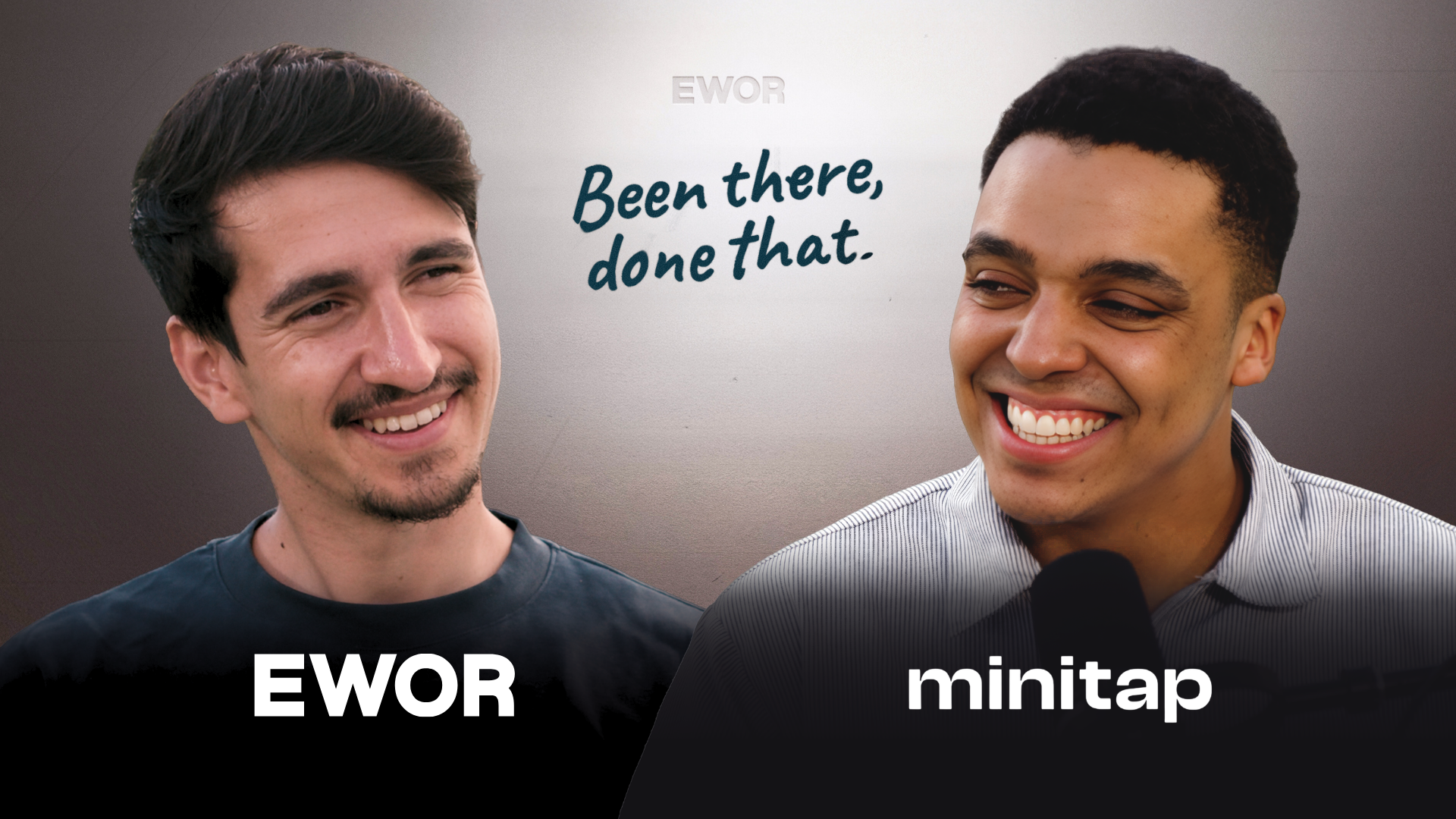
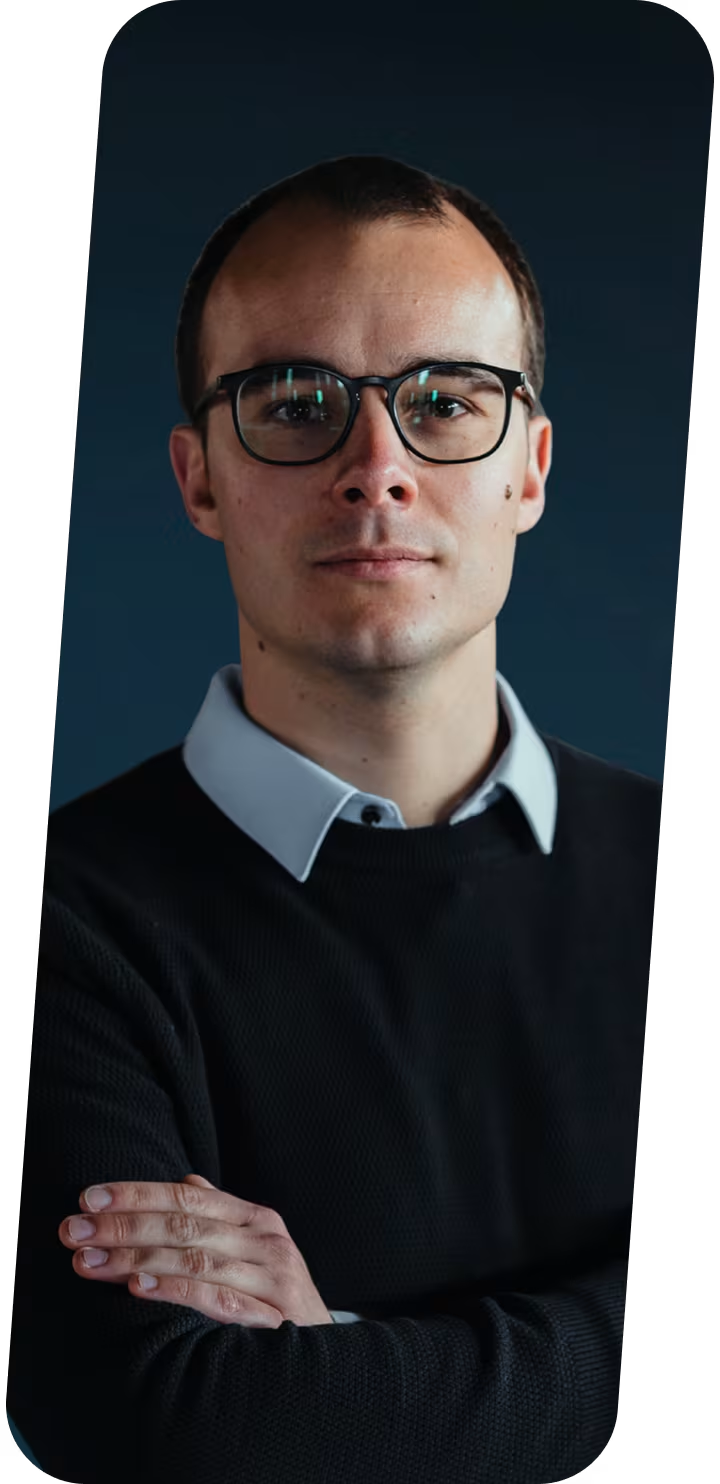
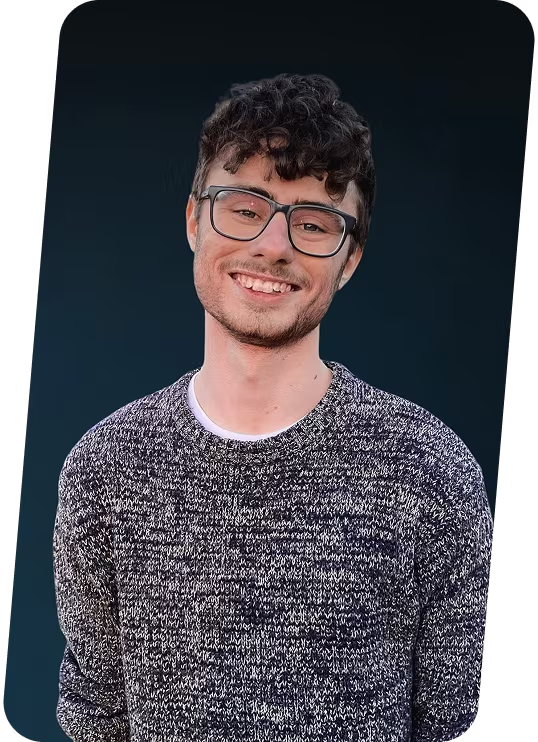
In this episode, Nico Dehandschoewercker, Co-founder and CEO of minitap, tells Daniel Dippold why founders chasing product-market fit shouldn't reinvent the wheel. He learned it the hard way, after trying to find PMF his own way cost him months building products no one wanted. Once he and his co-founder Luke switched to design thinking, they found the solution within days. Today, apps used by millions are tested by Mini, minitap’s AI quality assurance co-worker.
The raise followed the same logic. Nico spoke to over 100 funds for an oversubscribed $4.1M round and logged every rejection in a Notion database, sorted by "bullshit" and "not bullshit". Every rejection that held up went straight into fixing the business.
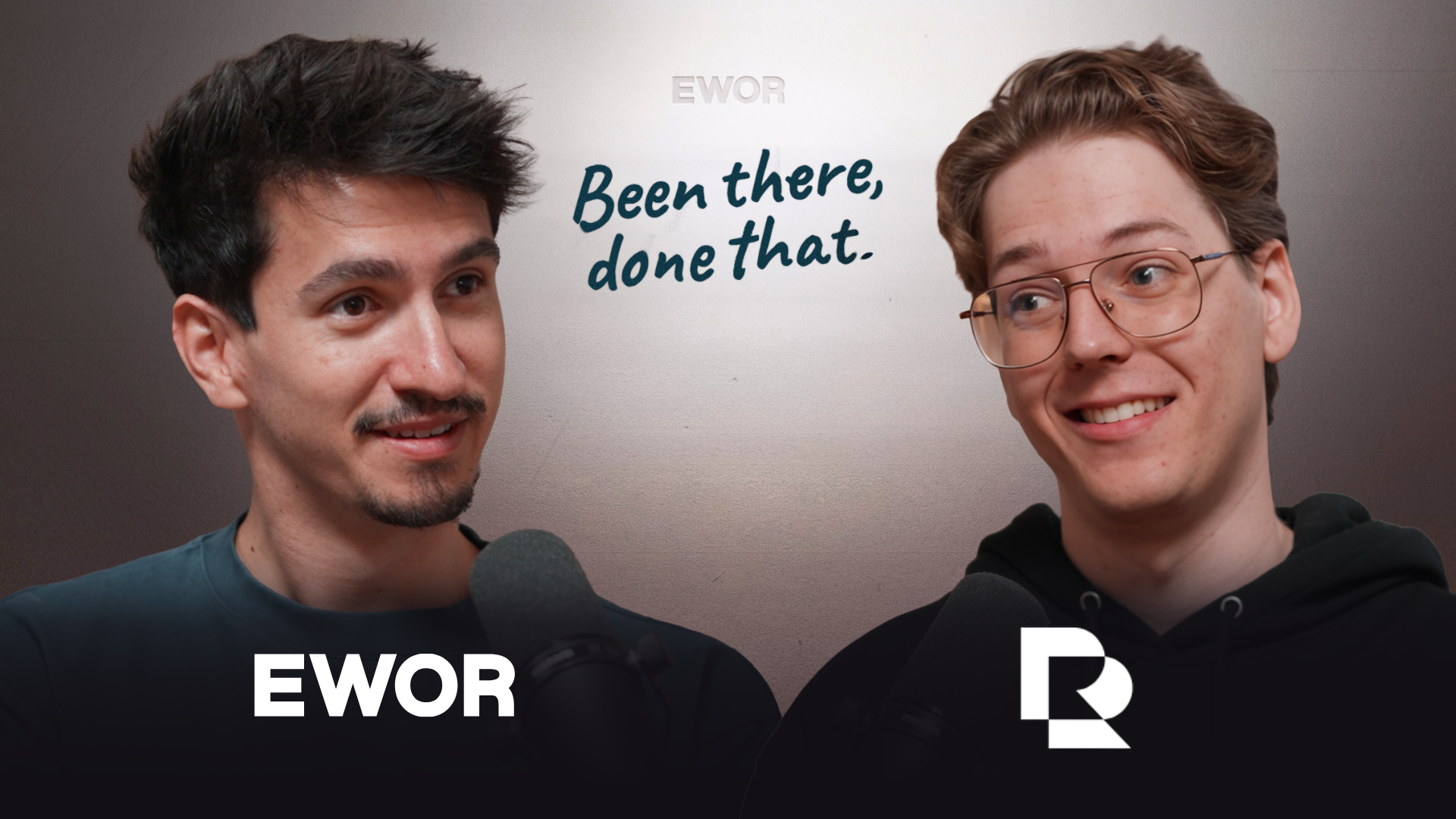
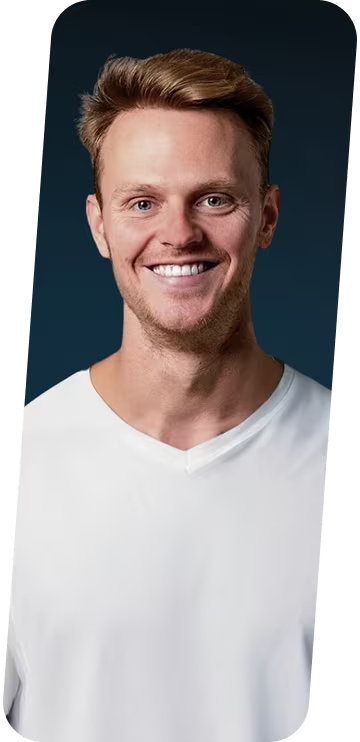
In this episode, Wiktor Stanislawek, Co-founder and CEO of Reactive AI, tells Daniel Dippold why European VCs called his pitch deck a red flag for naming OpenAI as a competitor, and why the angels he met in San Francisco called it ambition.
Wiktor's team are young founders from Poland who had never worked at an AI lab. YC passed on them twice. EWOR said yes after a one-minute demo: Reactive AI's token count stayed flat as other LLMs kept climbing. When Wiktor approached an OpenAI researcher to join the team, the researcher asked to invest, and the deal closed within 24 hours. The founder of Snowflake and a 5x unicorn founder followed. Now, Wiktor is challenging Silicon Valley's frontier labs from Poland with Reactive AI’s Large Awareness Models.
In this episode, Chris Fox, serial entrepreneur and Co-founder and CEO of Nimbus, talks with Daniel Dippold about treating profitability from day one as a repeatable strategy rather than a milestone.
Chris does not start a company until he knows the one channel that will get him to profitability. For Nimbus, that was referrals, and it carried the business to millions in ARR. He explains why the old playbook of raising big and chasing product-market fit for years is gone, why that window has collapsed from 18 months to 30 days, and why he deliberately raised almost nothing when he could have raised far more.