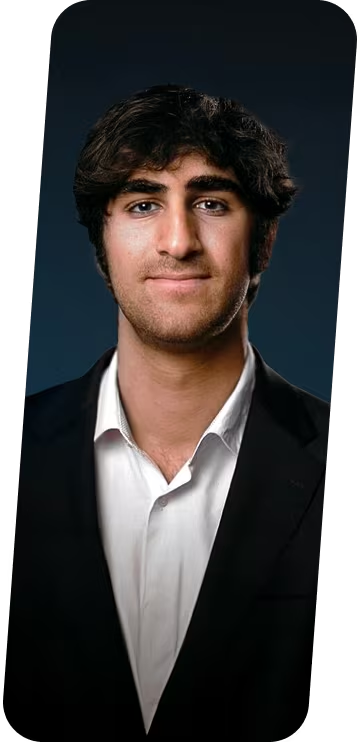
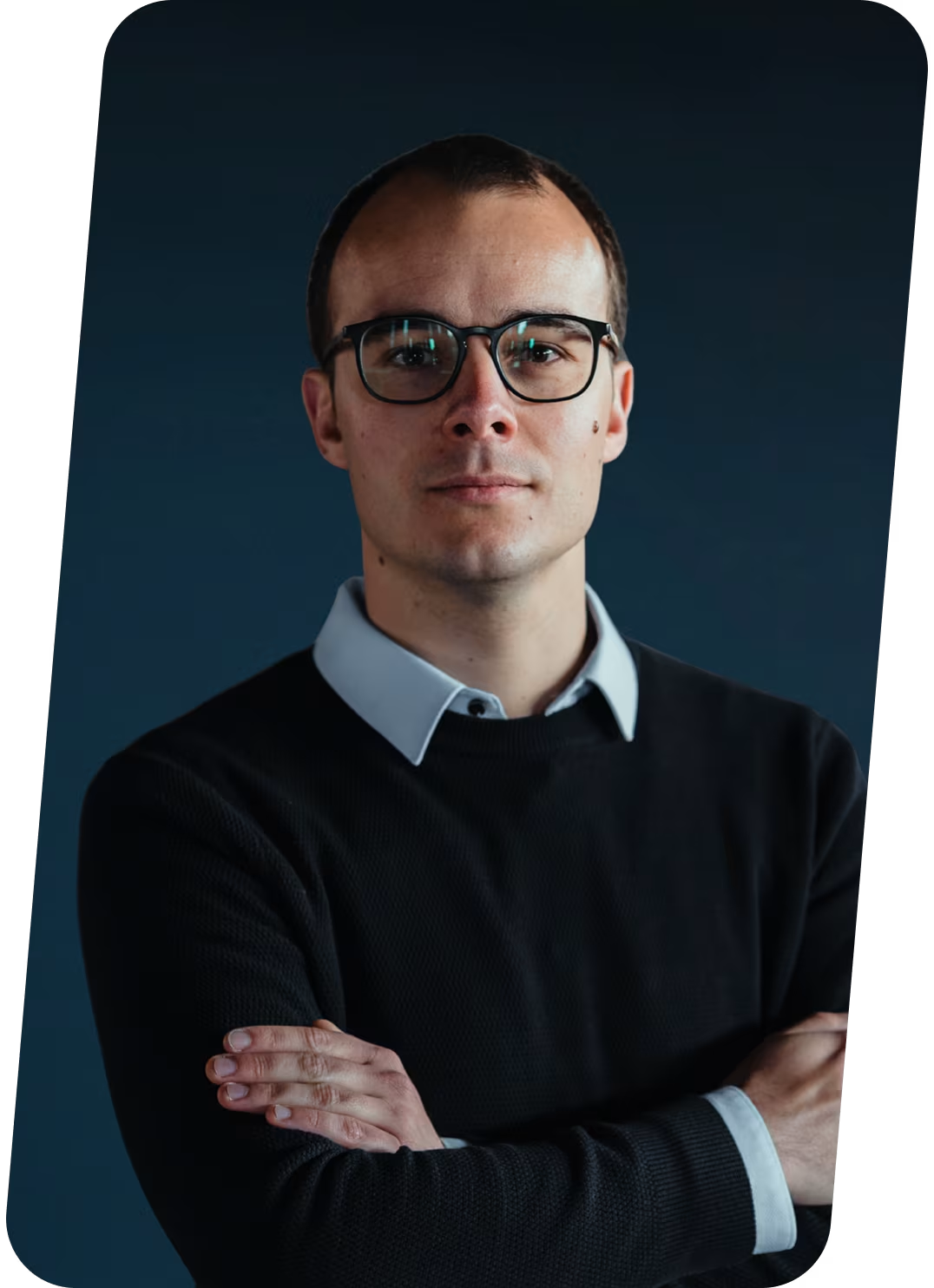
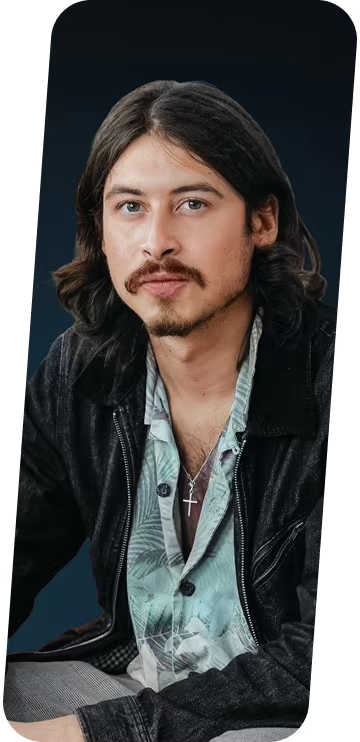
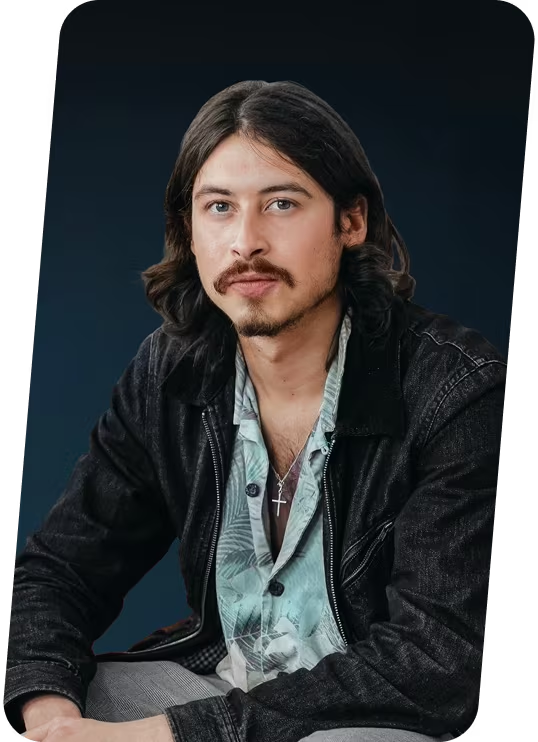
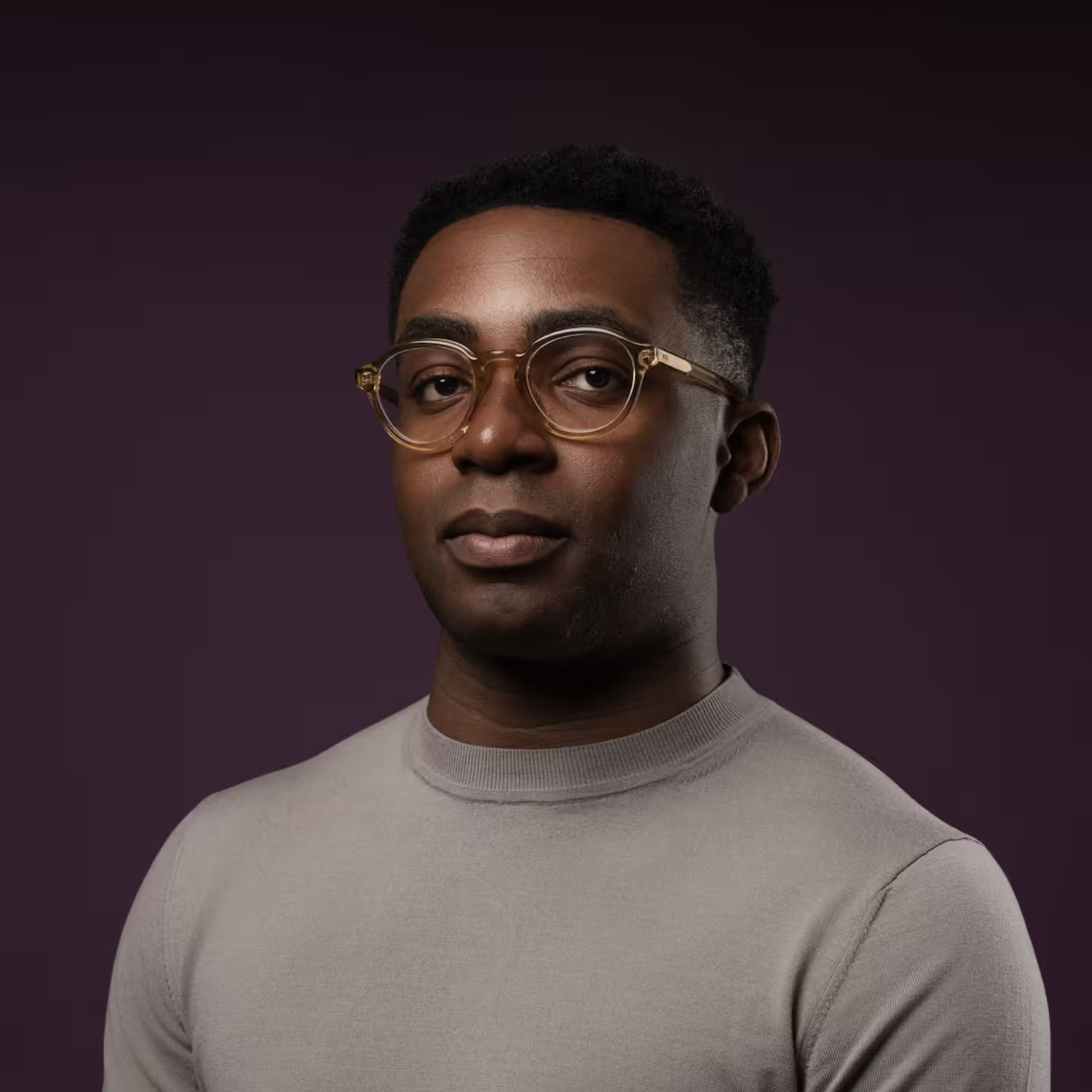
In this episode, Josiah Senu, Co-founder and CEO of Zuba, shares the difficult decisions he had to make to go from being a Harvard law prodigy to building the payment infrastructure Africa’s never had. Together with Petter Made, Josiah discusses receiving hate mail after turning down a magic circle barristers' chambers in the UK, a failed business partnership that cost serious time and capital, the psychological whiplash of switching from crisis mode to investor pitch in five minutes, and why optimizing for hiring ‘nice’ people nearly cost him everything. Plus the fundraising insight that changed how Josiah sees the game entirely – there are no rules.


Daniel Dippold: Welcome to Been There, Done That. A podcast we launched to talk about raw, unfiltered founder stories. We listen to so many podcasts ourselves, and we figured that most of them talk about success stories – after they happened. And facts and figures get distorted, plus strategies that worked 10 years ago don't work today anymore. We at EWOR wanted to launch something that tells raw, unfiltered founder stories today.
And we believe we're in a unique position to do this, because every year we support 35 founders to build $10B+ companies. We do that as founders ourselves. 40% of our full-time team have launched companies valued between 100 million and 10 billion. Therefore, we want to talk founder to founder with people on how they got from zero to a million ARR or from zero to a seed round.
You’re listening to Been There, Done That. Welcome to the show.
Petter Made: Welcome to another episode of EWOR’s new podcast series, Been There, Done That. I'm Petter Made. I am a founder. I've been 25 years in the FinTech and payments industry. I built a company called SumUp, valued at over 10 billion. And today I'm a full-time partner at EWOR. So today I have with me, Josiah Senu here in the studio and super excited to talk about your experiences as a founder and kind of starting with your founder story. Where did it all begin?
Josiah Senu: First of all, thanks so much for having me on the podcast, Petter. It's a pleasure to be here. I guess, where did it all begin? I asked myself that question all the time as well. When I was reflecting on it, I couldn't quite think of, was there a specific moment where I decided, OK, it made sense for me to become an entrepreneur? And then I recall, actually, it was probably at the end of a particular journey for me when I was pursuing law quite strongly.
One of my very good friends, he confronted me on our, let's say, a routine Nando's visit, the cheeky Nando's, as it were. We were sitting down on a table with him and his brother. And I felt quite happy with myself because I'd achieved this dream of getting to Harvard, where someone from my background, the circumstances, would have found it quite difficult to achieve. I'd gone to a state school in the UK in one of the most deprived areas of London. And my friend told me, you've done well, but I don't think you've done that well, actually. You could have done much, much more. And I looked at him like he was a fool. What did he mean? I could have done much more. He wasn't impressed by what I'd achieved. And he then proceeded to tell me an incredible story of founders of Silicon Valley and his own hero, which was this Brazilian billionaire called Jorge Paulo Lemann, who had sort of built companies like Burger King and Kraft and Heines Baked Beans and so many others. And then invested in a whole host of young Brazilian founders who had then gone on to achieve material success, like the Brex founders, for example. And he was gonna go work for this man at such an age post-graduation. And I sort of looked at that and thought to myself, well, that's an incredible moment, to be honest. That's quite significant. My understanding of the value that can be created in the world was very much determined by a traditional setting. And now, actually, I had an opportunity to break the box.
Petter: It was a little harsh to expect you to have done all of that, you know, what, while you just got accepted to Harvard, I mean, you gotta, you gotta give it a little bit more time for these, these other founders, but do you feel like he was throwing down the gauntlet, kind of a “Josiah, I challenge you to top these, these amazing founder stories?”
Josiah: Yeah, I think so. I think he saw from an early age and he'd seen the resilience I'd had, you know, going through university because actually he hadn't revealed what he was going to do post graduation until the very very end of our studies. You know, we were all talking about how we would become become barristers and, you know, maybe eventually one day become judges and sit on the Supreme Court of the UK, which would have been an extraordinary achievement in and of itself. But you sort of challenged the paradigms I had in my head. It's sort of, you know, you don't know what you don't know. And I thought he, I think he felt, and that's the way I interpret it today at least, that I could I could do so much more. Why was I limiting myself? I quite love that phrase of “it costs the same to dream big as it does to dream small” and I think he was challenging the idea of why not dream big?
Petter Made: Yeah, absolutely. I mean, it's one of those things where when we talk in our coaching calls, I remember an early conversation we had was, you know, are we going to go bigger than Africa or is Africa big enough for the beginning? And I think that having that mindset of go big or go home is something that I always really like because I think it doesn't, as you say, it doesn't cost you more to dream big, but it also puts your company in a very different place if you do think big from the very beginning. It's a bit like compound interest where two years down the line, having thought we're a global company, we'll have a very different looking company as opposed to, you know, doing Europe or UK first or something like that.
I think that's something that I come across in a lot of European founders is that they're thinking on a national level first and not on a global level from day one. So given, I mean, your background and your LinkedIn, when we first saw it, it was kind of like a meme within EWOR because this is ridiculous. This guy must have made up his CV. We’ve got to reference check this guy because like you were just absolutely rolling up all of the accolades and, you know, Harvard’s youngest scholar. And we just thought like, we got to talk to this guy and see what's going on there. When you had this level of academic success and achievement, you were talking to your friend, like what processes did that start in your head with regards to building a company and going the route of a startup or even getting into payments? That's a very, very different space than where you kind of could have been headed.
Josiah: Yeah. It's a great question because I myself have tried to reflect on that moment as well.
And number one, I think my parents played a huge role in the reason why, let's say, there were successive academic achievements which seemed to be just better than the next one. And it's largely because of the principle of always do the best that you can do, no matter what it is, be the best at it. It will set you up for great foundations to go do other things.
And I say that's important because when I made that move into tech, I was actually introduced to the first startup that I joined by my friend. So actually, when I spent the time in the US, sort of 6 months in, I actually tried to build a couple of companies working with a whole bunch of different people in the computer science department and the innovation labs at Harvard and failed miserably at all these attempts. And my poor friend looked at me and he said, I think you need some help and some guidance. That would be great for you.
And that's when I got introduced to the founders of Stone in Brazil, of course, André Street and Eduardo Pontes. And I think that introduction was very material for me because that's what introduced me to the world of payments for the first time. They were moving to the UK and they wanted to build another business very similar to what they built in Brazil. That business had listed on Nasdaq for 30 billion dollars. And the expectation was, you know, actually, let's try and build an even bigger business out in Europe.
Petter: Have you ever heard of a founder with a massive success who would then go, oh, we're going to build something smaller now.
Josiah: Exactly. You never hear it. You never hear it!
That was what was extraordinary as well for me, because many founders' dreams, the dream is the IPO, right? Your IPO is coming up pretty soon as well, right? That's the gate, and this founder had done it, and then he was like, I'm going to do it again. And I think that's like the ambition that you have as an individual is very much a function of your own purpose and a function of what you want to do in life, and I think being surrounded by that type of ambition was so important and formative to me.
So when I was deciding to move into tech, I sort of had this role model, let's say, in front of me, and then I had, in addition, the path I'd already charted. And I remember there's a third founder, actually, Ali, who is very much one of my mentors and invested in our business as well, and I remember when I made the decision to go between tech and law, I went up to him and asked for his advice as you do, and he said, “Josiah, you're going to do great in life no matter what you do. You haven't got to worry about that, but your parents are thankful for that. But in life, it's not about what you do. It's about who you do it with”. And that was material for me, because I started to compare, well, if I look at life in the law, if I look at life in tech, both are incredible professions, one in the pursuit of justice and another in creating value that materially changes the lives of others. It felt like on this side of the world, there was more impact that could be driven beyond simply a box that was law. You might change the law once every couple of years if you sit as a barrister on a Supreme Court or if you become a judge yourself, but actually creating products, creating value, working with people who are ambitious enough, who want to do great things, I found myself naturally drifting towards that world.
Petter: Yeah. I mean, payments are really the pathways of value traveling around the world. It powers everything, right? But you have a pretty personal story for the background of why you kind of picked payments and fintech as opposed to law, right? Maybe share some personal feelings.They're like, well, why this obsession with payments? Where does that come from? Not everybody gets excited about payments.
Josiah: No, no. And to be honest, I also didn't when I first started either. Which was quite funny, I fell into payments by accident. It was a function of my friend introducing me to these founders and then boom, I was on a journey. And I actually drifted away from payments for a second before I came back to it. And I think the thing that connected me the most is sort of connecting the dots later on. I think Steve Jobs talks a lot about this for himself. I think I was very much the same. The dots didn't connect for me until I tried to examine what did I wanna do for the rest of my life? What was the thing that would excite me? And like you say, payments touches everything. Every single person in the world in some way has interacted with some form of payment method. If I exchange cash for something, if I use a card for something, whatever it is, you've probably, if you've engaged in some way with the real world, you've probably engaged in some method of exchange. And that method of exchange is super powerful because it's the contribution of ideas, of movement, of progress. People can make things happen as a result of this exchange.
And my personal story, right, is that my father, he stowed away on a ship, heading to Europe, didn't quite make it, lands himself in Gabon. I'm born there. Eventually with my mother manages to get to Europe, makes a life in Europe. And I faced personal difficult circumstances with my family where at a time, one of our uncles in Gabon was facing some severe persecution. The only way to help him out was actually to remit funds, right? So this classic remittance story that a lot of people have where you have family, let's say in the Philippines or Malaysia or Nigeria or Pakistan or wherever it is, you sort of have people working in the West and they're remitting those funds back home. And there's the classic story of medical bills and school fees and things like that.
But what people didn't realize is that there are also real personal significant challenges beyond these things – moments of life and death. And my uncle was in that moment, was he going to survive in a Gabonese prison unless some payment was made in order for him to be released? And here you're relying on payment services to do their job, right? Like a Western Union or a MoneyGram or whatever it is, right? To do their job, make sure that the funds arrive.
Petter: Perish the thought.
Josiah: Right, right, right? Like it's pretty, it's a simple thing. It's like when you want to drink water, you want to have access to water, right? Like if people complain about things when they don't work, that should work, if that makes sense, right?
Petter: It's a fundamental service that needs to just work and be there.
Josiah: Exactly, right? If I turn on the light in my home, I need electricity to turn on. Otherwise, I all of a sudden get frustrated. And, you know, we know when power outages happen, how agitated everyone becomes, right?And sending a payment feels like exactly the same thing, right? Why doesn't it just arrive? Why doesn't it just exist?
And that was like, let's say, one side of the story, you know, on a personal side. And then I had, you know, my experience at Teya, right? Where I would be, you know, traveling from merchant to merchant. And every merchant, right? Is kind of the same. They are, you know, typically someone from somewhere else in the world, an immigrant who's trying to make the best for their family. The business is a form of subsistence. And they face the difficulties of fees, of card fees. And that world just begins to eat at you after a while, right? Because you're like, you know, you're doing the things that you need to do in order to make ends meet for you and your family. And there's a blocker. In fact, there's a tax, right along the way. And I think for me, when I when I figured out, you know, what's my personal story? Where do I want to be? I think was the ultimate realization that I think my purpose on earth is to delete the tax on hardworking people. And that sounds very political as a statement, right?
Petter: Sounds very mission-driven.
Josiah: 100%. You know, and that for me is that that's what gets me excited. I realized that the reason why I could work 16, 17, 18 hour days nonstop, year after year was because I was fighting for something bigger than myself.
Petter:
Yeah, that's really important. So we talked a bit about kind of your fork in the road there between the legal and the fintech careers. Was there a kind of a moment, some sort of trigger or seminal moment where you just thought what am I doing? I mean, have you heard the story of Matthew McConaughey? When he's got to call his dad, and he went to law school as well, right? So the family is super happy, he’s going to be a lawyer, massive massive kudos for him to even get into university. And he's got to go back home and say that actually, I want to go to film school. And he was terrified of what his dad was going to say. But his dad just said, one comment, and it was, don't half-ass it. Do you have some sort of like a moment that you can remember that I'm going to be a lawyer? And then actually no.
Josiah: Yeah. I really do, actually. I would say that for me, especially because of the background where I'm coming from, very similar to Matthew, your family relies on you in order to ensure things go well to survive. And you've charted a path which might actually rescue your family from difficult circumstances. There's an opportunity, right? There's an investment made, and it looks like that investment is paying off.
And I have Nigerian parents. And so, of course, education and all of these things are super, super important. So when I made the decision, I think, to no longer pursue law entirely, at least after my conversation with Ali, and you've given me that piece of advice, the hardest part was then confronting everyone else and the rest of the world with the decision that I needed to make.
And by this point in time, I'd earned a number of merit-based scholarships. And of course, these only goes to one person every year. So I actually remember when I eventually quit law, I did a bit of a public post about it, because I was an eager law student posting online at the time. And I actually got a bunch of hate mail back saying, you've taken up other people's places, and how could you do such a thing? You've betrayed the profession. And I remember that being a moment where I was like, wow, I've made this decision, it's not so easy to go do. And then I remember going up to the chambers itself that had given me the offer. And they couldn't quite rack their brain of why I decided to leave. I mean, people spend six, seven years, sometimes 10 years, to get to this very specific point. There are four people out of two and a half thousand, all of whom are at the very top of their game, who apply for this exact role that I had been given. And I was a second person in 105 years to reject these chambers.
Petter: Who was the other guy?!
Josiah: That's what I was asking!
Petter: We gotta find that out. That could be an interesting person.
Josiah: Exactly. Funnily enough, actually, they did tell me a little bit of the story, and apparently he also went to go pursue a path of entrepreneurship, and was pretty successful. So I didn't feel like I was ill-placed from making the decision I had made. But in the moment, I had to think of an answer. I think what I said was I was 100% committed until I wasn't. And I think it comes down to what my parents always said. Whatever you do, be the best at it.
Petter: Don't half-ass it.
Josiah: Exactly. No, exactly. There you go. And up until that point, I had been the best I felt at law. I felt like, multiple papers and cited by multiple Supreme Courts, youngest Kennedy scholar in over 10 years. I had really pushed the needle for what it meant to be the best in law. And now it was time to do something else. And the moment was made. But I think the hardest conversation was also the conversation with my dad and mum. I remember we went out for lunch, and when my parents take me out for lunch. It's, you know, you're going to have a bit of a serious conversation.
Petter: Get a bit get it talking to.
Josiah: Exactly that's gonna be a talking to. But I explained to my dad and my mom the decision I was making and what I was doing and my dad was very, very silent. I always get worried when my dad's very, very silent and doesn't say anything because you're sort of expecting something big to come at the end. Exactly. Just waiting for it.
Petter: Maybe he was just thinking.
Josiah: Yeah, and you know one of the things, the thing that he said to me the most was, I still think that you should be a barrister, but I trust your decision making. It hasn't failed you yet.
Petter: Those are powerful words.
Josiah: Yeah. And that's that's all I that's all I needed. And sort of I told, I went for lunch again, actually, very recently when I started Zuba, because actually all the way through my entrepreneurial journey, my dad has been insistent that I should be actually go pursue the barrister life, which is quite comical. But actually, when I when I decided to do Zuba, he was actually immensely proud. And I think, again, it's because of the personal connection to to Africa. You know, that was where he was born. That was where I was born. And it's an opportunity to to return some goodwill and to change the world. Right?
And I think that is a great starting place because today it still remains one of the hardest places to do business because of infrastructure. And if you can resolve that, then I think the sky's the limit. And so now, you know, I reflect back on my journey. And I'm immensely grateful for the path that I took.
Petter: I remember originally when we were talking, the first interview was actually a lot of fun.
Josiah: I enjoyed it as well.
Petter: It's one of those things where when you're talking to a team or a person the first time, you're trying to get a feel for who they are, what's their personality. And yeah, I feel like we just hit it off from the very first conversation and had all of these touch points.
I'd lived in South Africa, I'd built FinTechs, and we had sort of this mission against Western Union and MoneyGram ripping people off of their hard-earned money, 18% or whatever they charge these days. And it was interesting to me to hear that you guys were talking about building stablecoin-backed new payment rails and focusing on Africa in particular. Like I said to you guys, if I hadn't made the choice of joining EWOR, I would have been building a company like that myself, maybe with you guys, right?
So it felt really personal to me as well, speaking to you guys and thinking, okay, finally I'm talking to a team here that we'd spoken to probably a good five, six teams before we had that conversation with you, none of which we decided to invest in or admit to the program. But it felt like when we were speaking to you guys, as it happened, there were two teams that were strong at the same time. But we had to choose because at EWOR, we pick one team for one big idea so that we really maintain this ecosystem and this cheering for everyone's successes, which I think is so important and so unique about EWOR.
Every time we get together and you see all these WhatsApp channels from all the different residencies we've done or community houses, you see that they keep going, they're going on and that community aspect is really strong.
And so I felt that it was really, really good fun to have this conversation with you guys and feel like maybe this is the team, maybe these are the ones that are going to be EWOR’s bet into stablecoin payment rails and the new generation that's going to make the rest of that musky old payments infrastructure to kind of finally go the way of the dodo and be replaced by something that can really move the money at the speed of as fast as we can make it go. Because that really is the thing. It's also the velocity of money. And I think focusing on Africa where there is very little infrastructure and where there's a massive opportunity, a lot of people have tried, a lot of people have failed. Why do you guys think that you are the ones that are going to unlock this and build this infrastructure for Africa? We've talked about a lot of big ideas, but let's hear about some of those now.
Josiah: Yeah, I love this question, largely because it reveals a bunch of assumptions and biases that people have about the world. It's great. And I would have to say as well, I really enjoyed, by the way, our first conversation as well. I thought it was awesome. And there was a real connection there. So when you're an entrepreneur, you spend your time trying to fix the hardest problems. That's what excites you. Smart people like big challenges, it motivates them. And when you're thinking about solving problems at a first principles level, you're trying to go and attack, well, where are the significant problems? Where can I go to? What's the foundation of a problem? How do I really get and unpack it? And Africa remains the last place on the inhabited earth that doesn't have a unified payment processor. It inhabits 1.5 billion people also, and payments infrastructure is not unified. If you want to move money between African countries, it still remains an incredible challenge to do so.
You have new innovations like the Pan-African payment settlement system, which now exists of course. It's a modern innovation, but it still sits on, let's say, incumbent banks.
Petter: And old messaging systems between them, right?
Josiah: Exactly. And then when you think about moving money between an African country and a European country or North American country, it always bounces to an American bank because of SWIFT. So let's say the methodologies, the systems, the ways of operating in this part of the world are much further behind than everywhere else.
And you ask why? A number of different reasons, from regulatory reasons to technical infrastructure reasons to questions of political risk. There are a whole host of different reasons. And so your question that you have is, can I solve this problem? Right?
Like, do I have the skills? And even if I didn't, how would I go about solving it? What would I need to do? And so what excites me about Africa is that it's a blank sheet of paper to go and build the payments infrastructure that we would want to see in the world because it remains a place in the world which doesn't have a unified payments system.
That is what makes it so exciting. Some people always ask me, you know, why not LATAM first? And I get an allergic reaction. It’s like, well, if you're a true entrepreneur, why would you go to LATAM? It's way easier! If I go to Brazil or I go to Argentina, you know, there's a single country, right? Africa is 54 different countries, different cultures, different ways of operating, different systems. It's harder. But the opportunity, in my view, is as big, if not bigger, right? We're talking about a population, a youth population, which is growing in the world. You know, the top 10 economies are as big as the Indian economy, right? Like, people don't realize that there is a massive opportunity that exists here and will be, in my view, powering the growth of 2040 or 2050. If we live in the future, if our objective is to create the future that other people will live in, then it does not start in any other continent in the world but Africa.
Peetter:Yeah, I 100% agree and it's it's kind of like when we started SumUp, it would have been natural to go over and maybe compete in the in the US and try to carve up the market with Square, right? But we chose Europe again, fragmented 700 million people, lots of potential. But we wanted to do the harder thing. And we thought that we were the team to be able to do it. Just like you guys, you know, you're the team to build this now in Africa.
Josiah: Exactly. And it's not the case that, you know, you've decided, okay, I've got Europe done and I'm going to stay in Europe. You know, we're not going to go and attack other parts of the world. I'm not going to go to North America or, you know, I look at Asia and I'm not really interested. Right. Like if you're building a global business, right? If you're an Amazon of the world, if you're an Apple of the world, if you know you are building a global business, you are trying to get everywhere in the world as fast as you can. Just because I started in Africa doesn't mean that I need to be in there the whole time. Right. Like I aim to export a great business, a great product everywhere in the world. Every business everywhere in the world is exactly the same. That is my belief.
Doesn’t mean, you know, you hire, you need to do sales and marketing, you need to do finance. It's all the same. I think that's, I don't know, I think that's probably where we also had a massive connection where that's the opportunity, right? Like to do things that people haven't done before.
Petter: Absolutely. And it's connecting sort of the existing banking infrastructure and then building something better on top of that, something that runs at the speed of the internet and not at the speed of telephone lines and what not, if they even exist. I mean, some of the successes in Africa, like in M-PESA, for example, is appropriating a mobile phone network to act like a bank. I mean, it's showing a great deal of need for those types of services, but in the total absence of anything looking like infrastructure, they leaped over one whole level of technology to try to do something with the mobile telephone network and very old and not very advanced phones. So imagine what you do with the technology and the table is set, but no one's served the banquet yet.
Josiah: Right. Exactly. And what most people don't realize is that most of the greatest innovations that we see in the world actually happen in the emerging markets. You know, if you take, for example, Pix in Brazil, or UPI in India, or Japan with the Real-Time Settlement Network, or Kenya with M-PESA, or AWS in South Africa, right? Like the greatest, some of the greatest things we've known on planet Earth did not come out of Europe and North America. I know that sounds crazy to a lot of people, but that is the truth.
Petter: Yeah, like the taking the sort of the development of technological innovation for granted that it comes from a certain place. I mean, right now, it feels like China is leaping ahead by leaps and bounds in humanoid robotics, even in AI development.
There's a lot of things going on, where I think we have to sort of take a step back and not be so so arrogant from from the Western countries. And I think going after Africa now and really providing them with a payments network that that's worthy of the name, and then going global from there. I mean, maybe, maybe we're looking at Southeast Asia, where again, you know, you have, you have these people that you're talking about, who are a family member working abroad, sending money home, getting ripped off by Western Union and MoneyGram, like you have huge populations of migrant workers coming from from the Philippines and Indonesia and so on and working in the Middle East and then all over. So the need to help those people and to improve the lives of their families that are receiving these funds, getting 18% more money or 15 or whatever can be saved is a huge enabler for them. And so I think this mission that you guys have articulated and really thought about, it's not just about Africa, it's much bigger than that. And solving it in the hardest place first, kind of sets you up for for a lot of momentum when you then want to expand into other territories.
Josiah: 100%. I mean, I think about it this way, whenever, let's say, investors deal with a business building in Africa, there's always a sense of, oh, well, the Silicon Valley playbook just doesn't work in Africa. It's just a completely different environment. It's a completely different game, and you're like, yeah, it's a completely different continent. But actually, what you get down to is, what is the floor? Like, what is the minimum requirement in order for an individual, an entrepreneur business to be able to operate? What do they need? You begin to strip away a lot of things which may be a little bit more fancy, a little bit geared to purchasing power, GDP, and you start stripping it down to its fundamental basics. And I'm a big believer that the great entrepreneurs are philosophers, they're economists, they're social scientists, they look at everything holistically, and then make a contribution to the world. And I think Zuba’s contribution is realizing that if you solve the problems of the local African merchant, you will solve the problem of every merchant everywhere.
Petter: Yeah, I agree. I mean, there's some people smarter than myself, like Paul Graham, for example. Certainly more successful. But he said something interesting. He said that, you know, now that the next the next decade is the decade of the polymath.
You know, when AI is enabling people to be able to build things where they don't necessarily need to have development skills, but they can, they can take an idea, something they can imagine can actually, with relatively small resource investments compared to previously, be actually built and realized. And that means that a lot more ideas can be tried.
And it's also interesting, you know, what you said about the African merchant. So a lot of the teams that we spoke to before I met you guys, they were looking at remittance payments. So competing with Remitly, and all these ones are Wise and TransferWise, as they were called earlier, seven, 8% because of FX and still still bearing a lot of the costs of, as you mentioned before, the middlemen in the system, the toll booths, where you get taxed along the way, right. And I think what was what was interesting to me there was that, and they figured out that building kind of a crypto wallet with a stablecoin backing, in order to handle the FX translation between the two fiat currencies, they realized that what what the the merchants were actually doing was they were they were taking their money, and then they were depositing it into their stablecoin account. Because in Nigeria, they were looking at 14 15% inflation. And so they were literally just took the solution for remittances, and then actually just taking their money and just sticking it in there for for hedging against inflation, basically.
So stablecoins having the the inherent quality of being stable, meant that they could then protect their money against inflation, while they were continuing to to operate their business. And that was kind of an interesting thing to me where, if you provide infrastructure, then people will start using it in the best way that they know how to solve their problems. And so even if you didn't know that it's a problem for them, that they're losing a lot of revenue also on payments with four with different payment terms.
In the meantime, they see this as so FX exposure is a problem for them, along with inflation. And so as you're building this infrastructure, it'll be very interesting to see what you turn it into. As we see now, you know, RobinHood is offering prediction market functionality. I wouldn't be surprised if, you know, if Revolut goes and starts offering equity trading and so on. Everyone coming from completely different directions are building out a portfolio services around personal finance, you know, when it comes to B2C. And also, I imagine that the same thing is going to happen with B2B and merchants. So what are your thoughts there in terms of solving the problem for this African merchant? And what does that look like as you look into the future?
Josiah: Yeah, it's a great question. So I've thought about this a lot as well. So I imagine that what we're doing at first is we're building a railroad. So you're creating an infrastructure that connects two parts of the world, which traditionally have been underserved or haven't quite got a track.So today, we connect Europe to Africa. Tomorrow, we connect North America to Africa. Then we connect Asia to Africa. You're constantly building roads.
Eventually, at some point, you're like, well, LATAM to North America or LATAM to Asia. You're building tracks. Sometimes these tracks already exist, but they're poorly maintained. There's rails missing. It's bent in a corner. It needs to be taken care of. And then there's sometimes the track doesn't exist at all. Your job is OK to build it.
Once you've built the track and it's working, though, there's a sense of, OK, what goes on it? Typically, it's some form of train or carriage or something that's transporting something or goods, humans, whatever it is, from point A to point B. And that then becomes like the delivery. What is the experience that you're being able to offer? And the way we look at that, the way we think about that is actually, you kind of need something that's closer to the customer.
You need to maybe some sort of dashboard. Maybe it's a multi-currency account. Maybe it's an ability for them to do treasury. There's just something that just gets a little bit closer. And then you start to go into real details. Once you've got, OK, I've decided to put this train on this particular railroad, let's say Europe to Africa, I kind of care about the details of what's inside the train itself. What type of service are we delivering? Free Wi-Fi, how comfy are the chairs? And we start to go into the details. An ability for a merchant to do a bulk payment, an ability for the merchant to get an invoice. Can we categorize it? Can we reconcile it? Can we connect it into an ERP? You then begin to, like you say, to unpick different parts of the problem. And like you say, RobinHood, Revolut, et cetera, everyone's converging to the same place. But the design of how you get there is so important. The railroad that you pick, the train you put on it, the interior, the experience that you know. What about the experience when a customer enters the train for the first time, right? Do they get a red carpet? Is there paparazzi? For us, like how quick is it to onboard? KYC, KYB is a pain, right? You try to onboard a merchant in Nigeria and you're asking for their tax information, it's gonna be pretty challenging, right?
It can be a perfectly acceptable customer, but you're asking the wrong question, right? So all of those optimizations along the way is the journey that we're on. And what I'm excited by is that, eventually if you're really successful, you get to build a really strong network, right? All of a sudden people are coming on and off your train, your train's at different platforms, at different stations, different parts of the world. It's exactly what I imagine Zuba will be like. We will have a platform in different parts of the world.
People will be coming on and off. They'll get a great experience, we’ll make it the best experience in the world. And they will not want to leave.They want to stay on this train a very long time. Why? Because it's the best train in the world. Or I should rather say, it's the best payments experience they've ever had.
Petter: Yeah, I mean, when we talk about building the infrastructure, that is a foundation for all of these other services that you can add on top. But it's also a question of building a brand. Like Zuba, tell me a little bit more about the story behind Zuba and what you think that this can actually mean as you build out the company.
Josiah: Yeah, that's a great question. Most people don't actually realize that our original name was Velox. Actually, when we joined EWOR, we joined with the name Bellox.
Petter: It sounds like a nasal spray.
Josiah: Exactly, exactly. It wasn't a good name. I think we changed it when we realized that we kept on getting flagged as Russian arm sanctions. We wanted, you know, like all of this stuff. So we had to change that because of the mispronunciation on all sorts. But Verox means fast in Latin, right? So we were, we had a node back to this idea of we're trying to create speedy payments, you know, we're trying to create a world where things move faster.But when we changed to Zuba, it was an opportunity.
So Zuba, for example, means sunlight or sun in Shona, which is a language in South Africa, in Zimbabwe, mostly spoken in Zimbabwe. And we quite liked it, not least because, you know, practical benefits of four letter word, you can get the dot com. But also, right, it was about trying to export something authentically African to the rest of the world, right? Something authentically grounded in bringing energy, right? And that's, you know, when I think about myself, my co-founder, our team, we are a bunch of electric people. Energetic. It's one of the reasons why we love working with you, Petter. Right, right, it's because, it's because we jump on a call, and there is energy, there is such energy and passion to change the world.
What we do is already so hard and you just walk into it with a great level of enthusiasm, right? And that's what we want everyone to feel like when they use Zuba, when you're engaging with us as a brand, they experience everything about it and there's this sense of movement. Like, wow, things are moving, it's happening. We're changing the world, we're moving things forward. That is the quality of aspiration. That's the quality of hope. Hope is the reason why we do all of these things. And if we can contribute to that story, I think it's the greatest privilege on earth.
Petter: So speaking about the topic of hope, maybe we should discuss your experiences raising funds.
Josiah: Yeah, that's a great story about hope.
Petter: I thought that's a perfect segue because raising funding is never easy, right? Especially if you have a really big play, like you have a big idea, you're going to need quite a significant amount of money and the stakes are high. And that means that you're going to need really the right kind of investors on board who are willing to back you in this audacious mission, vision and undertaking of building something significant. And it's not always easy to find those right investors. It really comes down to meeting the right people and being able to explain and convey to them exactly what you see in your mind's eye. Maybe you can talk a little bit about that process and it was a bit of a rocky road and an adventure in and of itself.
Josiah: Yeah, it was, it was. I mean, I think, so I think probably the story to tell here is kind of what happened with our fundraising journey. You know, we got into EWOR, we actually closed a round pretty quickly, but then we extended the round uncapped when we were in SF with, you know, yourself, Daniel, that went really well.
Then we were like, okay, we've got enough. Let's go build for a second. You know, 10 days later, a huge opportunity that existed, everyone else. And then boom, that launched us into a fundraise. We were very fortunate that we had a bunch of term sheets preempting us into the round. It catalyzed our round. It meant that we could raise a lot more. And then let's say the challenge was like towards the tail end of it, where there was a bit of a wobbly moment of like, can we fill it? Can we fill it? Can we fill it? But then of course, finally, then it feels oversubscribed. And then we are able to make the decision of, okay, like we don't want this investment. We don't want this. Okay, we're pretty happy with this. And we walk away.
Petter: A lot of fundraising is about creating momentum and then communicating and conveying that momentum to the investors that you're talking to. What was it that you felt or at what time did you feel like we're gaining that momentum now, we're having those conversations with investors and getting the right kind of feedback that they're interested and we're going to be in a situation here where we may even get to choose between which ones we want to get on board because that's really important. I mean, you're building something now for the next 10 years, these investors that are on board, they're going to be around for a long time, so you better like working with them.
Josiah: No, I would say that EWOR was massively helpful to us with our fundraises, unequivocally so. Your support, Daniel's support, massive throughout the entire process – cannot be underestimated the extent to which that was material towards to us. Because when we started off raising, it was very much about a belief in us. I think we had like a product, we had like a customer, but there wasn't really anything material that it existed. This was really a bet on, these guys are probably going to go solve this problem and do it. And that gives confidence, right? You're like, okay, cool. Now we go and go do it. And we had an investor in our first round who then went to go on and lead our second round. And I think that progress that we were able to demonstrate between that round and the next round was huge. Because when we went into the Grand Pitch, we were actually not meant to pitch. Like, if you recall, it was us basically calling up and being like, okay, we're going to do the Grand Pitch, and oh yeah, we don't have any slides. Like we got to go do this presentation and demonstrate why we got to raise this money.
And I think that was awesome because the speed at which we were able to get to that term sheet, anchoring the round and enabling us to go forward, like massively helpful. I think we were fortunate that people could believe in the story that we were conveying.
And it's not easy, right? Especially for, let's say, African FinTech, which gets a discount, right?
Petter: It's a thing, right?
Josiah: It's a thing. It's a thing, right? So we were able to raise at a great valuation, a material amount of cash that enables us to actually go and win this story. And I think one of the exciting things right now is that we are very much on track to have an incredible year. Yeah. One of the best things about EWOR was the support that we received from the partners, yourself and Daniel, and especially Daniel, when we were doing the raise that we had, the angel round. And we'd raised a first bit of capital, the round was pretty crutch closed, but there was so much interest that there was a conversation. Maybe actually we might open it up to a bunch of other strategic investors who might get involved. And Daniel suggested that I actually do that entirely uncapped. And I thought, no, there's no way. There's no way any of us is accepting to do this. No way. It's like, Oh, just, just try it. Give it a shot. And so, you know, we, we, we, I started going into a bunch of these meetings, pitching, everyone's super excited. And then of course the punch line at the end is, but it's uncapped. Right? Everyone leans in like whoa wasn't expecting that.
But you sense conviction, right? I think it's a great conviction test. It's like the investors who really believed, they committed. And that was awesome to see. And we are so grateful to all our investors who did that. But there was one investor in particular who just could not, could not do it. There was a sense of, you know, I don't invest no cap. It's impossible. And I went to Daniel and I was like, oh Daniel, like, you know, I'm gonna miss out on this check. Like, what do you think? This has been challenging. And he, and he said, don't worry about it. He'll come back. And I was like, ah. I don't know. This is Daniel talk. Fine. Like whatever. We've lost this check. Cool. I really like this investor, but cool.
We move on. And about a month later, right, this investor comes back, you know, what's going on? I've been hearing so much about you from other investors, like, what's happened since then? It's like, yeah, we made progress. It's going okay.
And then he was like, can I get involved in the round? And then, you know, of course, I hit him with a punch line of, like, it's uncapped. And after some umming and aring, changes his mind and decides he wants to invest uncapped. And I think that was a critical moment, right? Because it just demonstrates for me that there are no rules in this game. Life is a playground, you can ultimately choose what you want to do. And people will make decisions constantly based on a variety of different factors. But those factors are really what you make it.
Petter: You can create the circumstances of your own success. Right? That's really that's really what it looks like and and that's a every investment and every relationship with investor is you know, it's a singular event which you know, you can you can try to influence to become exactly the outcome that you would like to see and that's an important confidence boost in a realization for a founder to have that and I think that that confidence also shines through in your storytelling and you're pitching and ultimately since this the you know, there was a period of time between those contacts, you know, you guys are executing, your things are happening and you're moving at that speed and that is I think what what what really gets the investors to to feel like wow, these guys are really moving you know, they're they're the real thing It's not just it's not just a deck.
Josiah: Yeah. Completely agree. You often get moments in life, or maybe not often. I think for you now, you're probably far between, but something, you see it and it fundamentally changes how you see the world. It's like incredibly dramatic, right? Especially with fundraising, for me, it was definitely one of those moments where I was like, all this time, all of this advice that everyone was giving me about how things should be done, doesn't mean anything!
Petter: You're not standing there with your hat in your hand and sort of asking for alms to the poor.
Josiah: Exactly that.
Petter: We didn't talk about this earlier. Maybe you're very competitive in your academic life.How would you how would you sort of view yourself as a competitor from the perspective of an entrepreneur? And how does this kind of how does this spill over into other areas of your life?
Josiah: I feel like you're asking that question with pickleball in mind. Yeah, I'm insanely competitive. I'm insanely competitive. I like to win. I think winning is a choice. So I understand the consequences of what that means and take sacrifice. But I'm definitely of the mentality of I will not quit. And I think business is a way for that to be unleashed. A sport where we were playing together in San Francisco. It comes out. Sport is probably where it comes out in a very unvarnished, unpackaged way.
Petter: I thought I was at an NBA game with all this shit talk that was going on. It takes one to know one!
Josiah: The slander on that court, you know, like if people knew, but, you know. But it gets me pumped up, it gets me fired up, and you do this stuff to, in my opinion, to win. So one of the great, I guess, inspirations to me is Jack Welch, and he's a phenomenal leader. I think he had sort of 30 consecutive quarters, quarter on quarter growth, and he was managing, he was the CEO of CEOs, so he had a litany of CEOs that were reporting into him. And he says it so simply and so clearly, he's like, no one wants to be on the losing team. No one.
Petter: That's the title of his book, “Winning.”
Josiah: Exactly, right, no one. You know, I'm a big football fan, right? And you know, like, I'd see my team go to the Champions League final, whatever it is, right? Like, you know, go to the dressing room of the team who's lost the final, right? Any final, any sport, right? Are they, are they excited? Are they happy? They almost did it. They almost made it happen. They were the almost people, right? It's painful. Who were the guys who were remembered? The winners win, right? Why do people have a conversation with me, right? Why did you pick Zuba for EWOR, right? Because it was a demonstration of winning consecutively over many, many years. And that's the standard that I have for myself is a standard that we have for everyone at Zuba. We have winners, we win. And sometimes winning is not necessarily in a specific moment, right? You might lose many, many times to win, right?
Petter: Many times, it's a mindset thing. So Josiah, we talked a lot about winning and the mentality that it takes to win but it's it's kind of like you know Michael Jordan and in his series saying you know I've missed more shots than than anyone I've taken more shots – and that's why that's why I win, because the practice puts me in a position where when the chips are down I'm the one who's gonna take that shot I know I can do it. I practiced it a bazillion times, it's going in.
But he missed a lot of shots as well like in those mo buzzer moments right and exactly as you said like what’s it like in the locker room of the losing team after you took that buzzer shot and it bounced out that kind of the resilience and and the mental attitude that it takes to to get back up again and say okay we didn't win today but we're gonna get you know we get to go again that's that's the prerogative and and the beauty of being an entrepreneur is you can you can fail as miserably as you want and yet the next day hopefully you get to go again and do it better right? What were some of the challenges so far on the journey where you felt like man I am NOT winning this is a tough situation?
Josiah: Yeah, great question. My therapist tried to uncover a lot of my psychology because I sort of said I love to lose. And the reason why I love to lose is because I love to win. It's a very interesting psychology here because every time I lose, I learn.
Petter: And you get pissed off and you get even more motivated to work harder for the next time, right?
Josiah: Exactly. So losing is a gift. It's a gift to do better. And the way that's packaged for us is there was a moment during our fundraise where we're moving at a significant speed. And part of the opportunity that's in front of us is that we can work with an entrepreneur who's been building in the payments space in Africa for the last sort of 10 to 15 years. And we were able to work with significant members of their team.
We're able to acquire a whole bunch of different assets, which have bolstered and improved the intrinsic value of the company. It was a huge opportunity. And we actually flew out to Kenya. We sat with a whole bunch of execs from this business. And we were thinking about how we would chart the future. It was a material opportunity. It was a game changer. And honestly, it was a huge learning opportunity, right? Like the details of how exactly to build a winning cross-border payments company, the lessons learned from trying to do that. That is invaluable information that people don't just give up in a simple conversation. And I remember we were presenting to the wider team what our vision was, what we were trying to achieve. I was like interrupted. I was like, oh, guys, we know all about this stuff. Give it to us plain. What is this actually all about? We got quizzed and pushed. And in the moment, I thought to myself, we're losing the room here.
We are not convincing these guys that this opportunity makes a lot of sense. But at the same time, it's fundraising. So I actually had to cut my answers in short to go away and jump on a fundraising call and speak with an investor. And I remember, you have to imagine there's 16 of the best execs in African payments quizzing you. And you're like, this is killing me. How am I going to get out of this? How am I going to convince the guys in the room that they should stay here? And then you've got to jump on a call five minutes later, euphoric, excited, ecstatic, and selling that your company will be the best company in the world.
Petter: Multiple personality disorder!
Josiah: You know, like, you know, not to give people fuel, but like I sat there thinking, you know, like, am I a psychopath? You know, like that is, that is very weird, right? Like to go from completely being in a place of being emotionally very low to completely changing your personality to be emotionally very high in such a short period of time.
And in the end, this opportunity that we had didn't materialize, right? So it didn't happen. That hurt. We had invested a lot of time, a lot of capital to make it happen and to turn around and be like, you know that thing I said I would do? I didn't do it. And I pride myself on doing the things I say. It's almost crushing your identity, right? Like, that is super hard. Those are, for me, some of the most challenging moments. That was a challenging moment for us and our company.
But you know when I said I love to lose? I took that moment, I took that situation and I said, well, what do I learn out of it? What do we get out of it? We know the challenges of our space a lot better. We know the individuals, the personalities. We know the bumps along the way that might come. We can mitigate for that. We can prevent that. We didn't get everyone on board. We got some people, though. And sort of being able to take away some of those benefits and then making yourself stronger as a result. Like, that is awesome.
So you know, not to sound like, oh, you know, why are you eternally optimistic? People often label this on me a little bit. Like, you're always happy, always. But how can you not be when you're spending a lifetime learning?
Petter: Yeah, I think that I really like that insight and it also points to you being very self-reflective as a person, which is quite unusual in general. You have to have a few more years on your journey to really start considering, you know, why did I react like that or why am I feeling this way right now? That is a superpower in and of itself. And I think you embody that really well.
Josiah: And that was one challenge that I faced, but another challenge that was quite tough for me, also very personally, and actually what I find is that your company challenges as a founder feel very personal, because it's just about you, realistically, it's your decisions, your choice, it's almost confronting your own failure directly, squarely in the face. So another one of these ones was when I left at Teya and I decided I was gonna go build a company, I optimized to work with nice people. I felt like when I was at Teya, I'd work with some people who were, let's say, challenging.
Petter: Abrasive?
Josiah: You don't have to be British about it. Like, it wasn't easy to survive in that environment. I think, you know, people talk about the cultures of Revolut and maybe because there isn't a lot of public advertising about Teya, people don't recognize that it was actually one of the most challenging environments to work in and grew me personally quite a lot.
So when I left Teya, I was kind of sort of had like PTSD. You know, is there a world that exists where you can build great things with people who aren't ruthlessly annoying and painful and abrasive? Can you do it with people with lots of integrity and leave of kindness? All right, that's what I was looking for.
And I ended up starting a business with people with this type of personality. Except we didn't go as far as I wanted us to. We didn't push as hard as I wanted us to. And I think one of my personal reflections is that nice people actually do finish last. And it's not to say that, you know, don't be kind, don't be generous, don't be a leader who empowers, right? But you gotta hit the goal.
Like, and sometimes that means saying things that you don't necessarily want to hear.
You know, kindness isn't patting someone on the back and telling them, oh, it's gonna be okay. Kindness is saying, look, there's a big massive hole in your sweater. And like, it's making you look really bad. You should probably fix that up. And if you do, you'll be better, I'm sure, right? But like, the way you communicate that matters, right?
Communicate in the right way, but you gotta pull that out. And I think one of my big reflections is that, and maybe a bit controversial, I don't know, maybe we'll challenge you on this, is you sort of do need a little bit of a ruthless streak. I would say my co-founder today, is a great guy from Dagestan. And if anyone knows anyone from Dagestan, they don't mess around, right? And we've had very sharp conversations, you know, time to time, brutal conversations. But every time at the end of it, we come out stronger and we feel more aligned and we feel closer towards the goal. You can't have a fragile personality.
Petter: No, you have to be anti-fragile. It's one of those things where, I mean, being honest and open about things that don't work, the sooner you have those conversations, the better, and especially with your co-founder. I mean, we talk a lot about that in EWOR that, you know, you've got to, you've got to really be on the same page. You should take a look at the co-founder agreement, you know, agree on a lot of fundamental things before you get on that journey together. And I think that's probably the most important thing there is as you're starting the company and you guys have definitely found each other and have this great relationship where you can really butt heads and then afterwards, you know, take into account the other viewpoint and then, you know, laugh about it and then you move on. Like you need to be able to clear the air because if you have a team of pussycats, you know, everybody's being nice, but they're tiptoeing around issues and topics, you know, that's not a winning team. Coming back to that, like the winning team and competitiveness, highly competitive people are not nice people necessarily, right? You're, look at John McEnroe in tennis. Like he's a pretty, he's a pretty abrasive guy. And yet he's a legend of the sport and a fierce competitor, right?
Josiah: Yeah, like, yeah. And I always I always said, like, to people, it's like, you may not love me, right? Like, I may not be your best friend, I may not be the person you want to call your dinner party, but you will respect me. And you will do the best work you ever did. When you're at Zuba, 1 million percent, because I will push you to your limits, we will push each other to our limits, because we're not here to participate. We're here to win. Yeah. And that type of rhetoric, even, oh, my goodness, for some people, it's like, this, this person is in a completely different environment, a really different world. But I kind of want to touch a little bit of what you mentioned earlier, of, you know, knowing what the values are, what the principles of your co-founder are, I actually think it's, it's very much like relationships, a difference between a life story and a love story, right? There's a love story where, you know, you see your co-founder and they've got like all these accolades.
God, they're amazing, wow. It's beautiful, you know, you go off in this like one month, you know, building, you go to a retreat somewhere, and like, oh, we built this amazing product, but it sells to no one. No one's buying it, but it was really, it was amazing, right?
But there's a life story, which is, so how long do you want to be in this for? Four years, five years, IPO, exit, right? Like, are you willing to work 18 hour days, six days a week? How do you think about hiring? Remote, hybrid, in person? These are life story questions. They're not values questions. They're not, you know, like, do you believe in God? It's all things like it's not, you know, like, oh, you were kind, but this is like practical, meaningful stuff.
Like, okay. How do we think about our board? Who sits on the board? It's questions like this, which are way more material. And I feel very fortunate with my co-founder that we had those conversations day one. I say, and I'll let you come in now, it's like we had an ego requirements conversation.
What does your ego need for you to be at this company for the next 10 years? Right? Do you need to be on the cover of Forbes? You know, do you need to do podcasts? Like, what does your ego need? Do you need to have technology and product reporting to you the whole way through? Like these conversations, I think every co-founder team honestly should have them because like, that's when you know whether or not it's truly a life story and not just a love story.
Petter: Yeah, and you need to write that down on paper and sign it off, like that's the co-founder agreement and we talk a lot about that, that co-founders need to do that and have those tough conversations. What happens if someone plunks down 100 million in two years' time? Do you take it or do you say, forget it, we're building something truly monumental here, you know, 10 billion plus, that has to be there.
Josiah: Exactly. And, you know, let's say, God tests your faith at different points, you know, like, you know, someone slaps an offer a 20 billion on your table, but you said to your co-founder, we're going to build a trillion on a company. 20 billion, 20 billion is, but 20 billion, right? Like nerve, character, personality, right? Like winning, like this is, it's in the pressured moments that you find out who you truly are.
Petter: A hundred percent. And in regarding God if you if you want him to laugh, tell him your plans.
Josiah: Tyson also said it so well, everybody gets a plan until they get punched in the face.
Petter: What's, what are the things you're most excited about now that are coming up?
Josiah: We've talked the talk. Now it's time to walk the walk. It's execution mode.
So in the last couple of months, we've been heads down. We have a clear direction of where we want to go. Milestones that are set and honestly, a week on week, quarter on quarter, we keep hitting our goals. We're moving with a lot of pace and I'm super excited for 2026.
I think at the end of this year, we're looking hopefully to really have it maybe even raise our next round at the pace that we're going at. Every time we close a deal, every time we uncover a new opportunity, every time we close that opportunity, we have the sense of momentum we're building towards something. You know, demand in Africa is not the problem, right? It's the execution and every day, you know, we had three merchants sign up last week, right? And they want to do a trade. They want to move. They want to make like the pace of movement in our space is electric. That's what we do this for. So from my perspective, the thing I'm most excited by, what's keeping me pumping is can we realise the next milestone? Just go from there, keep building, keep progressing. Because you know, this will be the last company I ever do.
Petter: Okay, that's a big statement. And what a perfect point to end on as well. Thank you so much Josiah for joining me here today and thank you everyone for listening in your time and hope you got some value out of this podcast episode. Thank you.
Daniel Dippold: If this conversation resonated with you, there are three things you can do to support.
First, you can subscribe at whichever platform you're listening to this. There should be a subscribe button. It would mean the world if you subscribe.
Secondly, you can share this with someone you believe would benefit from the content of this conversation. And certainly you can go to ewor.com/signals and stay up to date on all things EWOR by subscribing to our newsletter. Well, thank you very much for listening today and see you at the next episode.
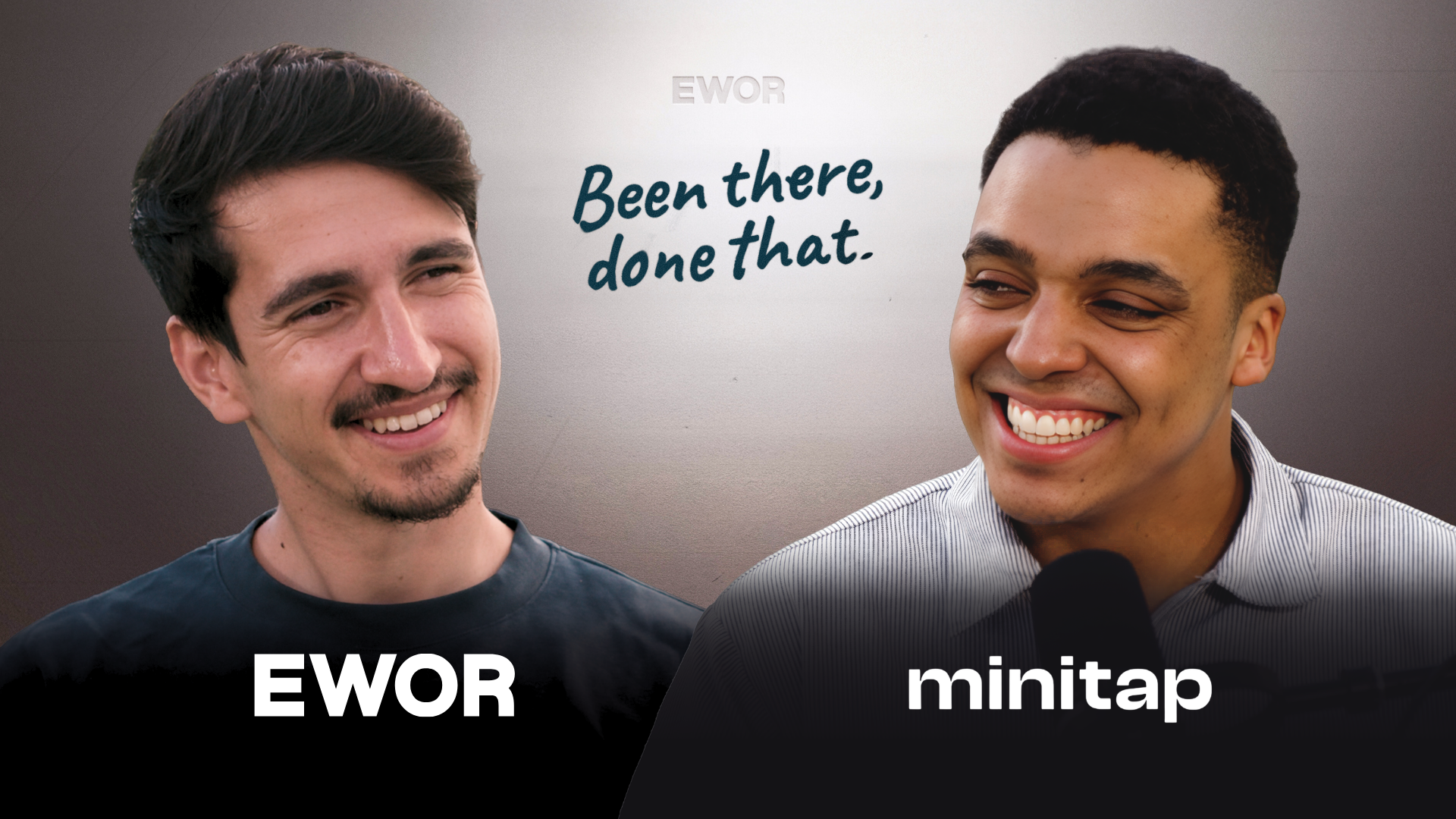
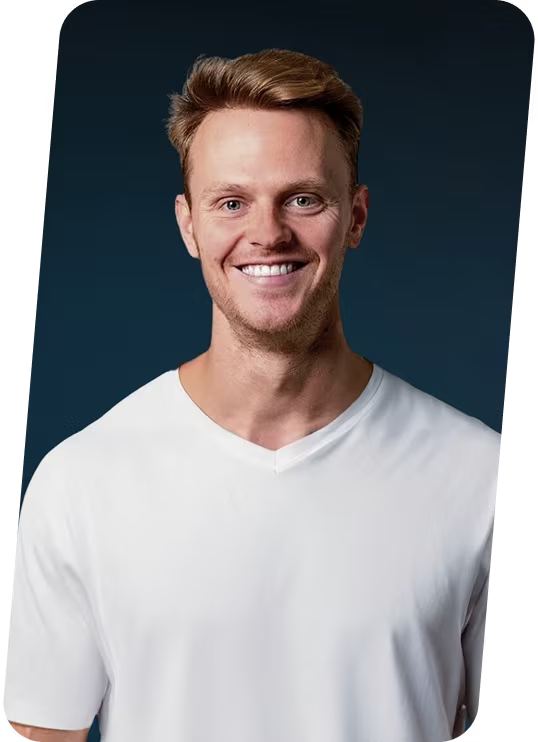
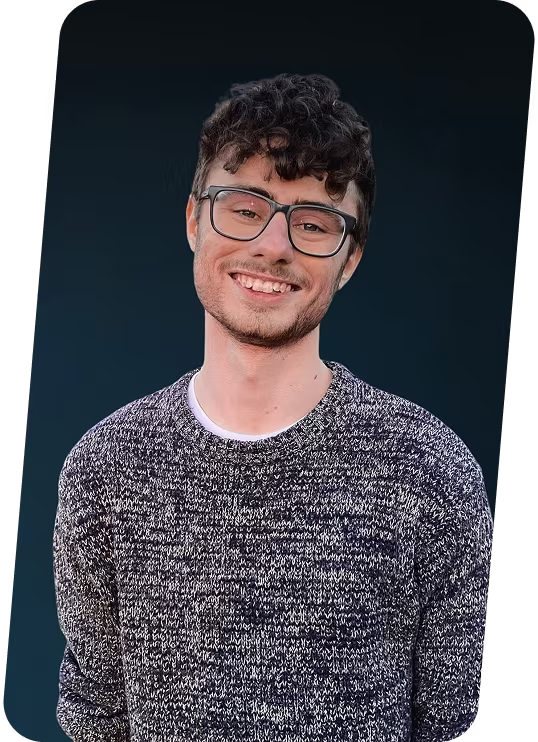
In this episode, Nico Dehandschoewercker, Co-founder and CEO of minitap, tells Daniel Dippold why founders chasing product-market fit shouldn't reinvent the wheel. He learned it the hard way, after trying to find PMF his own way cost him months building products no one wanted. Once he and his co-founder Luke switched to design thinking, they found the solution within days. Today, apps used by millions are tested by Mini, minitap’s AI quality assurance co-worker.
The raise followed the same logic. Nico spoke to over 100 funds for an oversubscribed $4.1M round and logged every rejection in a Notion database, sorted by "bullshit" and "not bullshit". Every rejection that held up went straight into fixing the business.
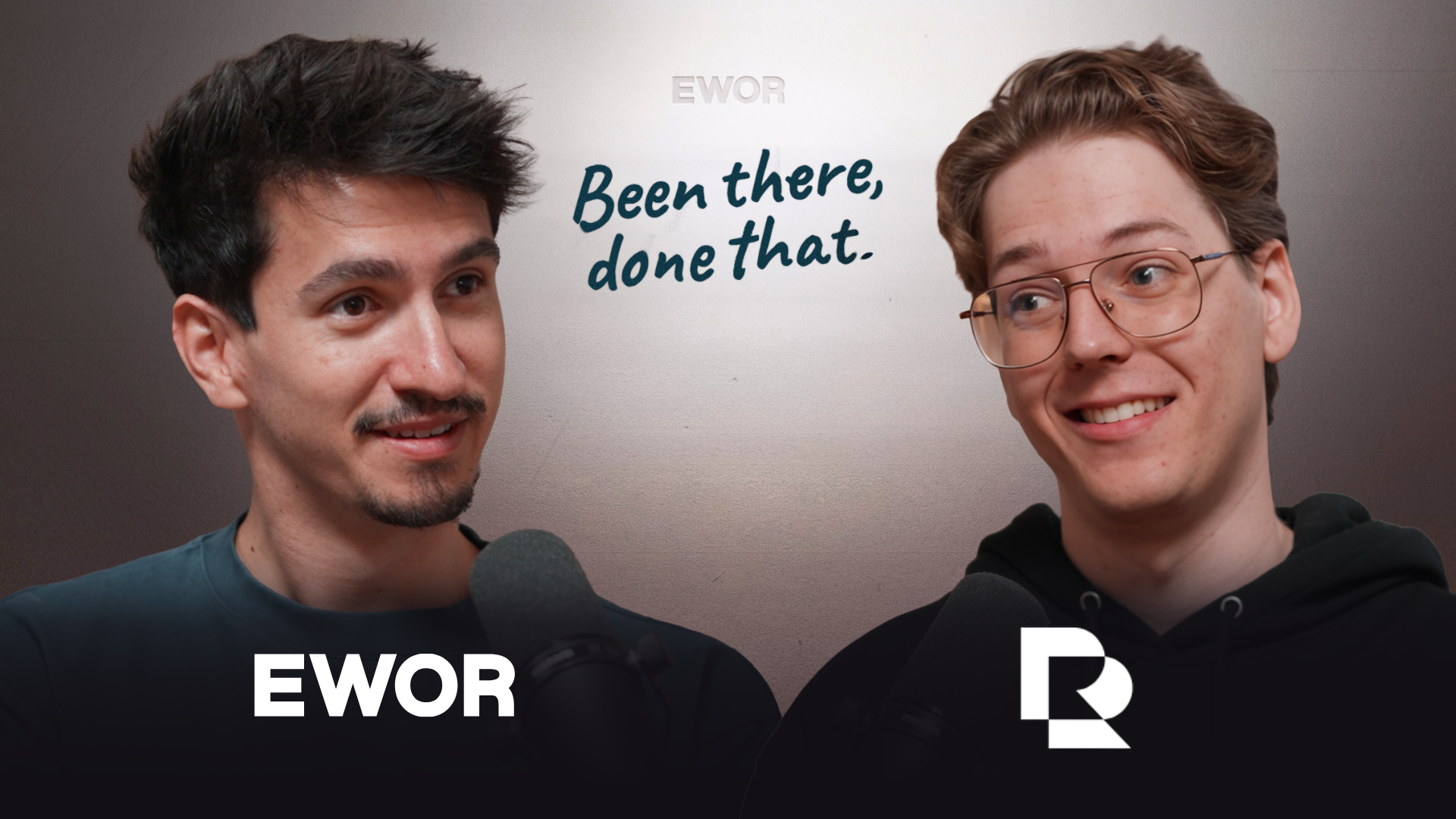
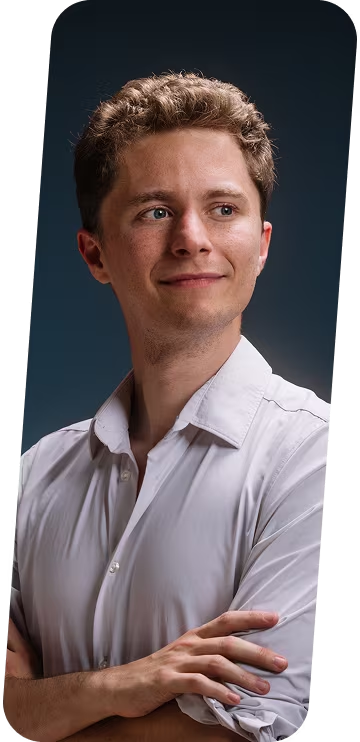
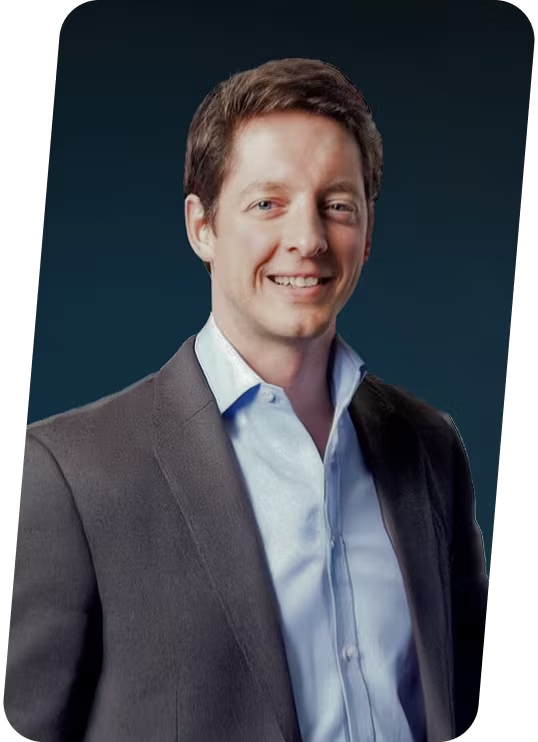
In this episode, Wiktor Stanislawek, Co-founder and CEO of Reactive AI, tells Daniel Dippold why European VCs called his pitch deck a red flag for naming OpenAI as a competitor, and why the angels he met in San Francisco called it ambition.
Wiktor's team are young founders from Poland who had never worked at an AI lab. YC passed on them twice. EWOR said yes after a one-minute demo: Reactive AI's token count stayed flat as other LLMs kept climbing. When Wiktor approached an OpenAI researcher to join the team, the researcher asked to invest, and the deal closed within 24 hours. The founder of Snowflake and a 5x unicorn founder followed. Now, Wiktor is challenging Silicon Valley's frontier labs from Poland with Reactive AI’s Large Awareness Models.
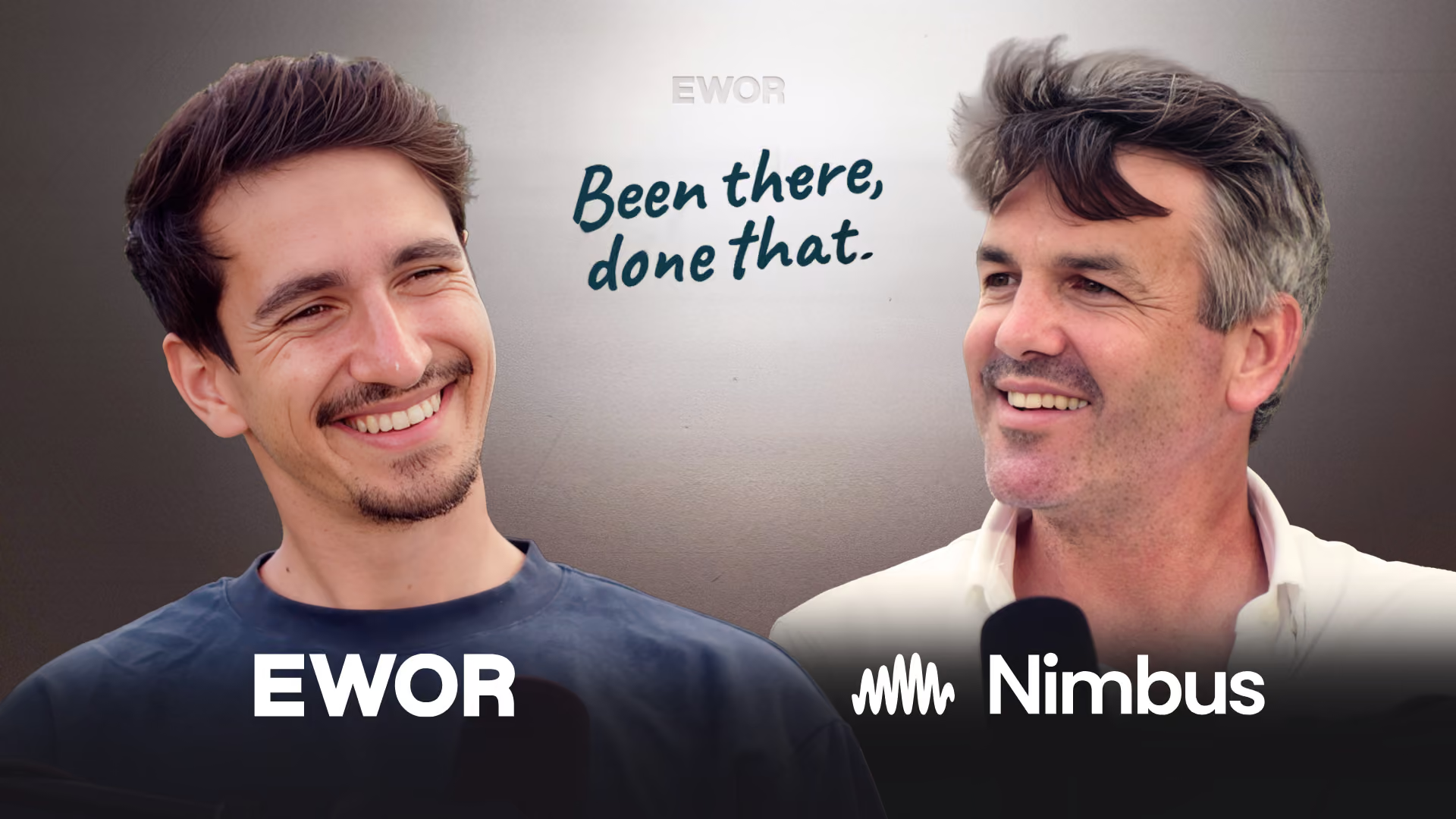
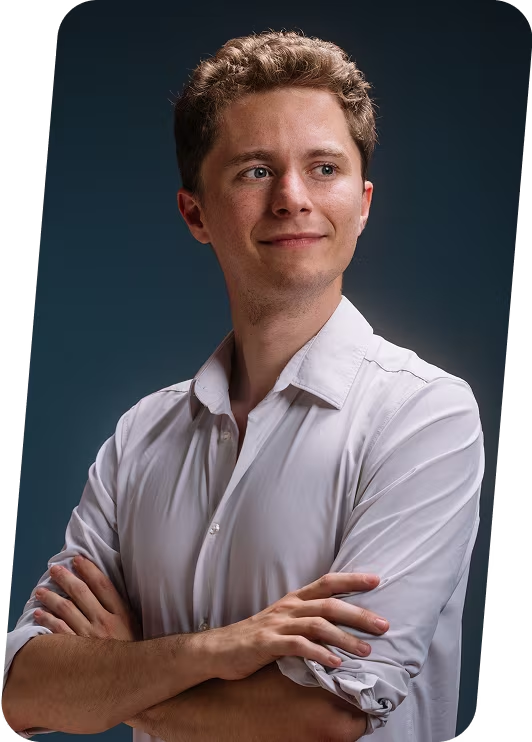
In this episode, Chris Fox, serial entrepreneur and Co-founder and CEO of Nimbus, talks with Daniel Dippold about treating profitability from day one as a repeatable strategy rather than a milestone.
Chris does not start a company until he knows the one channel that will get him to profitability. For Nimbus, that was referrals, and it carried the business to millions in ARR. He explains why the old playbook of raising big and chasing product-market fit for years is gone, why that window has collapsed from 18 months to 30 days, and why he deliberately raised almost nothing when he could have raised far more.