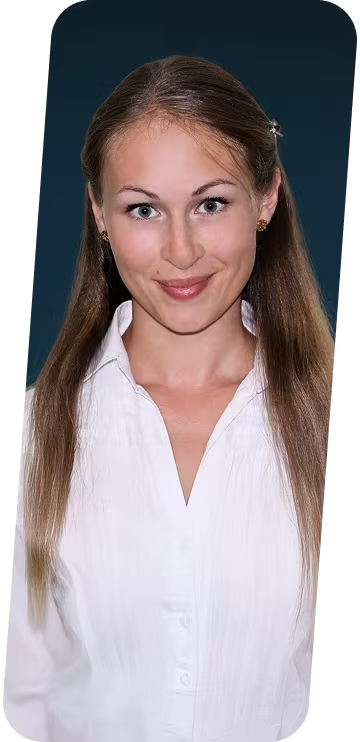
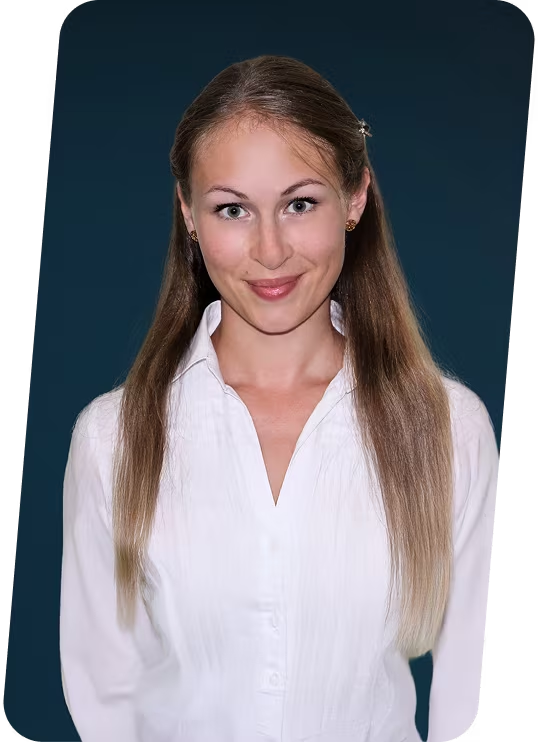
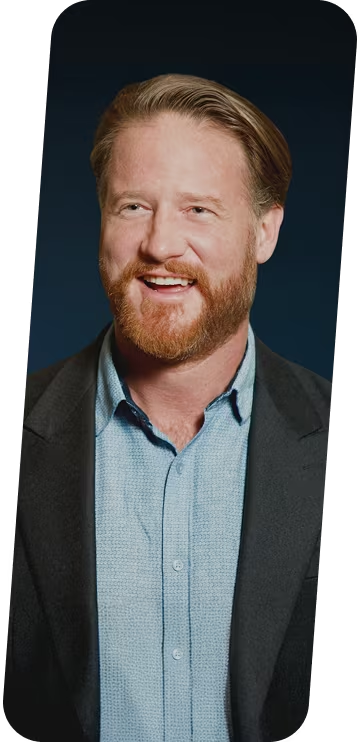
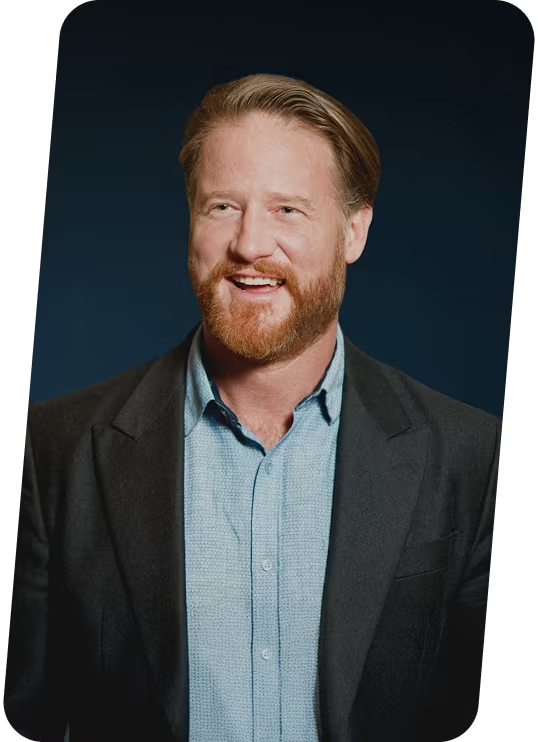
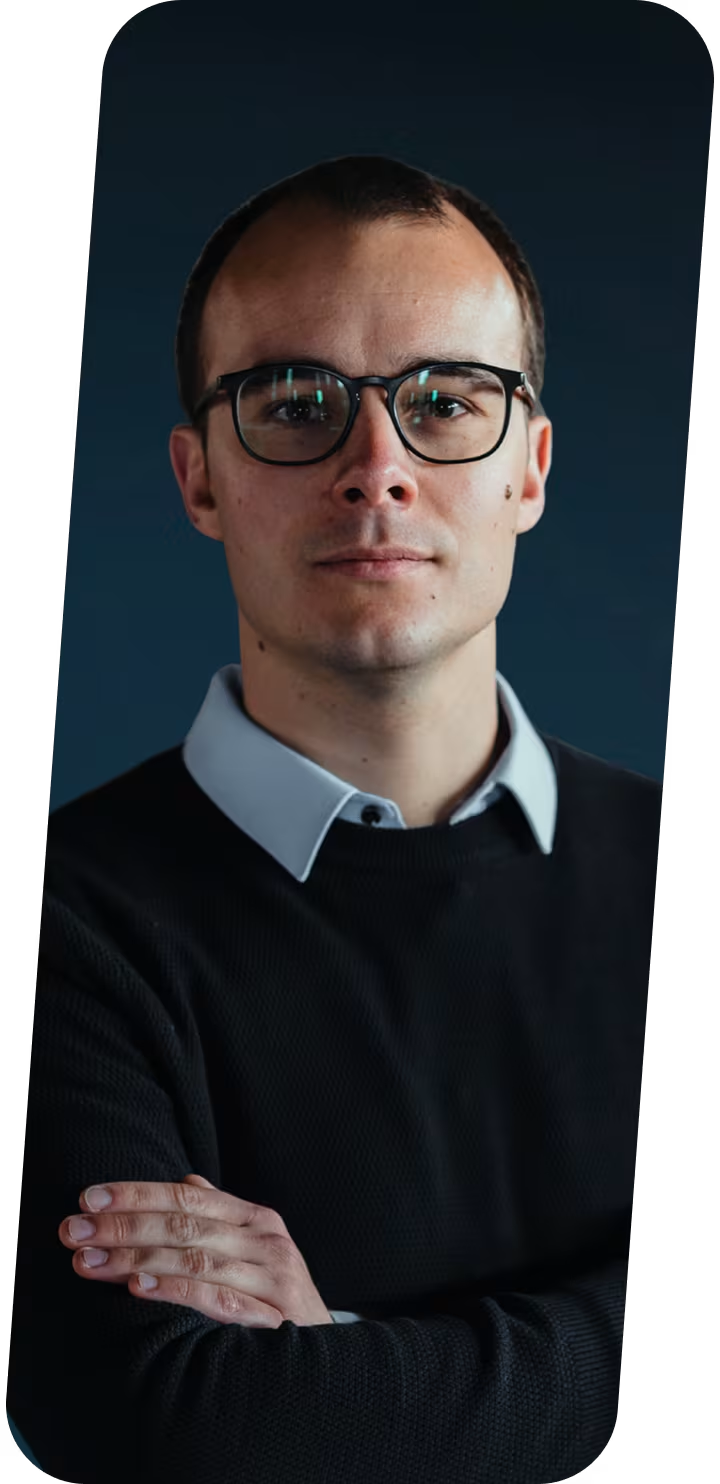
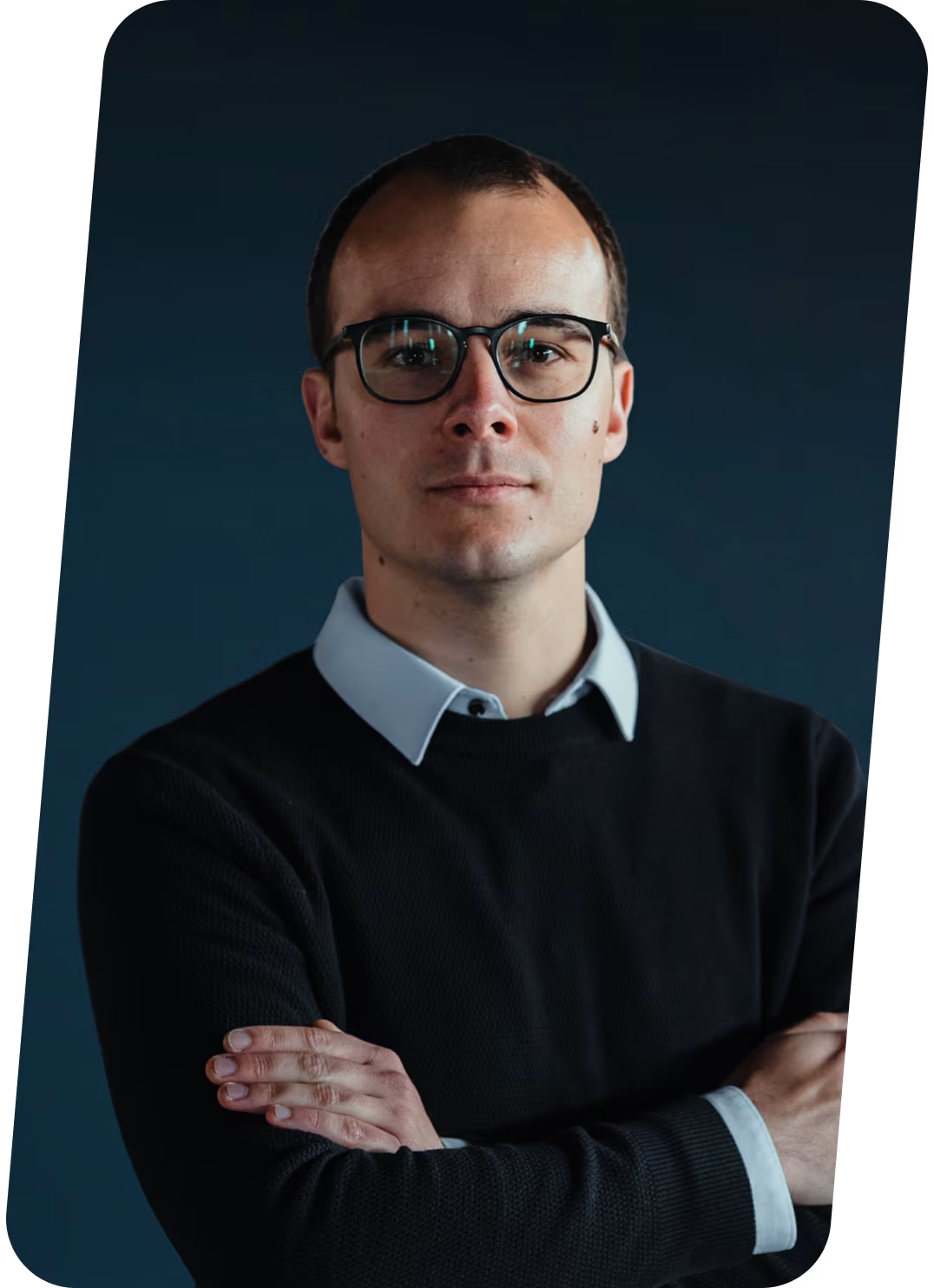
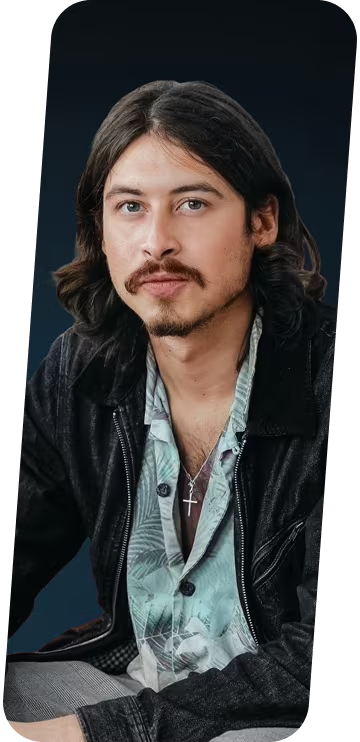
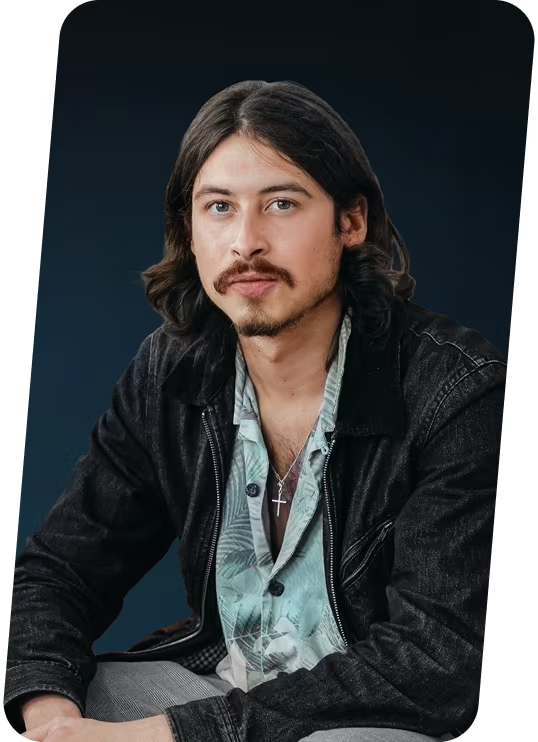
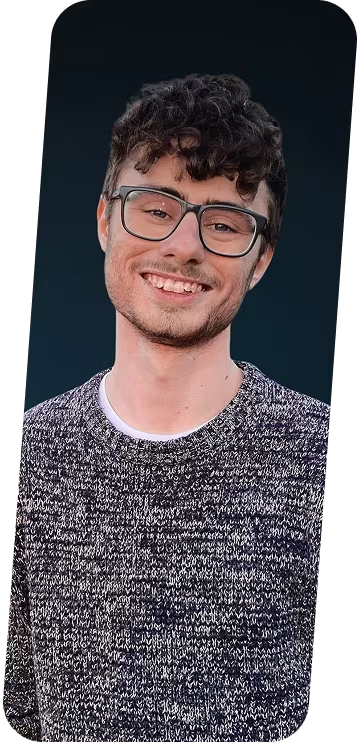
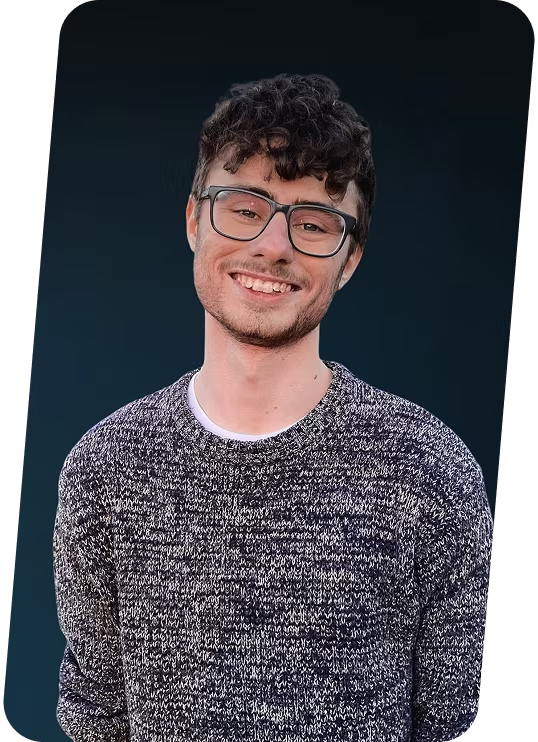
In this episode, Lukas Koestler, Co-founder and CEO of SE3 Labs, tells Daniel Dippold why he joined EWOR after Paul Graham called it "intellectually dishonest", and why it turned out to be one of his best decisions yet.
He also discloses something he has never shared publicly: the last time he screamed at the top of his lungs. For Lukas, that is not losing control but a system, because bad shit happens all the time as a founder and your body needs an outlet before you can solve the problem. That system got tested mid-fundraise, when a Big Four consultancy called to admit they had failed to submit the tender his round depended on.
Additionally, Lukas shares why he turned down Tesla's autopilot team to found a startup in Germany, and how he achieved an oversubscribed pre-seed with Lakestar and Seedcamp in June 2026.


Lukas Koestler: We, we applied to EWOR, we got accepted, but I also thought, OK, why not just shoot an email to Paul Graham? And he responded that he didn't know the people doing it, and he thought that they were intellectually dishonest. And what we discussed internally was actually like, like, if you were the first or second or third cohort of YC, and you had back then reached out to maybe someone at Sequoia, right? Oh, they have said, right?
So I thought, OK, so maybe we're in the same situation, right, where we join now a program that will be like super, super dominant in a few years down the road. We were like, OK, we just take the bet, and we think that that it will help us more. And it has actually been super true.
Like, I think it has been one of the very, very good decisions we made. For me, actually, sort of the moment I decided to do a startup was when I turned down an offer from Tesla. They actually have weekly meetings where Elon is either there like virtually or physically, and he's so deep. Like, I've never seen someone perform at this level. It was just incredible. So if I like, I would have loved to stay there. But then somehow I'm also very much a European or German patriot, right? The country has given me a lot. I still very much believe in Europe. I want to give back. And that's why I decided to come back and then build in Europe. I actually had the most German thing where one of my family members asked me if my pension would be safe if I didn't start up. I was like, it's probably going to be all right.
Daniel Dippold: I think your pension won't be safe anymore in Germany if you work a safe job!
Lukas Koestler: That's true. I never shared this publicly. So when I got the news, I just went out, went on a walk. And when I was like, kind of no one around, I screamed at the top of my lungs, which I do sometimes because I think after you've done it, right, you're, you're just way more calm.At the time, I thought that one of our competitors had poached one of our employees that I really liked a lot. And I was fearing that it would only be the first of a, of a like series of people in this case had turned out that the team member actually just wanted to build their own startup. And so in the end, I was just super happy for them to do it. If you're the founder of a company like batch, it happens all the time and you just need to deal with it. A lot of things are actually going wrong all the time. It's normal, like, like you're not underperforming is fine.
Daniel Dippold: Welcome to another episode of Been There, Done That. Today with Lukas Köstler, who is the CEO and founder of one of the leading spatial AI companies, SE3 Labs is building models that understand the 3D world. So Lukas, welcome to the show. So naturally, I need to ask, when was the last time you screamed in a forest?
Lukas Koestler First of all, thanks for having me, Daniel. Of course. I think it was like a few weeks ago. I never shared this publicly. So at the time, I thought that one of our competitors had poached one of our employees that I really liked a lot. And I was fearing that it would only be the first of a series of people. Yeah. So when I got the news, I just went out, went on a walk. And when there was kind of no one around, I screamed at the top of my lungs, which I do sometimes. Because I think after you've done it, you're just way more calm.You need to give your body an outlet for the things that happen. The funny thing is, though, very often, when you then come back and you deal with the situation, in this case, it had turned out that the team member actually just wanted to build their own startup. And so in the end, I was just super happy for them to do it. I mean, I have to be most supportive of people doing startups. So in the end, it actually turned out to be a good thing. And now they're off to the races.
Lukas Koestler: The second one like we have like one of our very early working students has built a great company too and i think they're now i think they're actually part of ewar now yeah i know and now we have a second one no so yeah that was the last time happens from time to time yes
Daniel Dippold: But that's what you do as a founder, right? Like you extrapolate any situation into the future. You're like, oh shit, what if this happens more often, right? And then you need, and typically that triggers anger and emotions, but in the office, you can never, you can never let this out, right? So anger management as a founder is something I believe you really need to learn. Like of course, I think of myself as a good and kind person and the same for you, but I think life, especially as a founder where shit hits the fan all the time just makes you angry, right? And you need to react. So like, what are your like strategies to kind of deal with like the everyday shit that happens as a founder?
Lukas Koestler: Yeah, yeah. I mean, it's perfectly true, right? I think it's specifically, if before founding a company, you were used to things going very well, because you generally did good work, right? It's like, in a normal job, once a week, maybe something bad happens, or actually less often.Now, if you're the founder of a company, like, bad shit happens all the time, and you just need to deal with it. So what do I do? I think on the one hand, right, I go out, I scream at the top of my lungs, and actually, it's just like a physical reaction, body cools down, you're much more relaxed after. Then two, I just try to get myself out of the problem and be like, hey, a lot of things are actually going wrong all the time, it's normal, like, you're not underperforming, it's fine. And I think places like eWar, but also a lot of the stories that other entrepreneurs share, they help a lot, right? I think in some sense, I think every company has two to three near death moments throughout the company. I think we have actually, we have not had this yet. So I'm always like calm down, right? This is for sure not the worst thing that's going to happen. So you'd need to be ready when the actual bad things happen. And then the last thing is, I do try to be disciplined with sleep, I try to be disciplined with doing at least some amount of sport, so that just from a physical perspective, my body and mind is ready to take distress.
Daniel Dippold: Yeah, I think you just have to be physically in tune, right? If you, if you don't work out eventually, 10 years, maybe later, right? But like, it will really hit your heart most of the time, like a couple of months later, actually.And secondly, there's so many things you can just do to be in tune with your with your body, right? Like there's one book, the 15 commitments of conscious leadership that actually recommends in a meeting, you just especially with your leadership team, you know, like when you're in a safe space, you have psychological safety so high, that you just scream when you need to scream, you're like push on the table, like when you need to push on the table. And they just say to make this like an open culture, right? And to like, kind of let your let your emotions flow. Like when when you think about like your your culture, right, like the way you deal with like kind of difficult situations, would you say you already found like the right culture that you believe will carry you through all of those like difficult moments?
Lukas Koestler: or your question? Yeah, I think I would actually say so. I think, I mean, I love the team that we've built. I think those are really extraordinary people. And the important thing is we've gone through many hard things already, right, and have always showed up for one another. So I think we have the right culture.And just to make this very clear, we're actually, I think, probably a very soft organization internally somehow. We're very kind to each other, right? I try to say thank you way more often than criticize people. Now, of course, I fail sometimes. But how?
Daniel Dippold: How do you do it? Like, do you have a checklist like every week and you look at like, because it's, I know this since ages, right?You should always appreciate four times more than you like kind of scold people. But how do you actually practically do it? Right? Like, do you check it? Do you have a daily reflection exercise or something?
Lukas Koestler: I do sometimes do daily reflections, but they're often not disciplined enough to actually do it. And then I think on a per person basis, I have a very good feeling like what were the last 10 interactions I had.I think it's also, I just feel very deep appreciation for the people, right? They could be somewhere else. They could be doing another thing. They have chosen to commit their time to build together. That I appreciate a lot, right? I mean, there's no way like it will work without a team. So it's actually a natural outflow of who I am, I think.
Daniel Dippold: Yeah, if you truly care, right, people will feel this. I think it's just a lot of people ask me, how do you create this atmosphere, right? And I was like, we just really care about what we're doing, right? And the question also is how do you create a startup culture of like where you just know you're like everyone deeply cares, right?We talked about storytelling earlier and so easy to just tell some story, but it needs to be a true story, right? Like an authentic story that is, that actually happened this way. And it's just, do you think you can fake this or like fake it till you make it or do you just naturally need to care so much already or have your purpose already in you so that the startup is just like the catalyst for this, but this kind of happens first and otherwise you shouldn't start the startup. What do you think?
Lukas Koestler: Yeah, I think it's a very good question. And whenever I talk to people and they ask me if they should do a company or not, I 100% agree. I think there should always be a reason that's bigger why you do this, right? And I think there's actually a wide variety, right? So if you want to become, like, say, a centimillionaire plus, for sure, startup is a great way to do this, right? If you want to become very famous, I think also startup is a great way to do it. But for me, it's really like, I just want to build something. And I want to build both an organization and product and work with the customer and all these things. And the startup is just the way to do it, right? I would do it if they, I think there's this old saying, it's like, this place is so good, I should pay to be there. Right, I mean, I wouldn't do the startup, even if there was like no economic upside in it for me. I don't care for these things.I just want to build the thing. But I think the one thing is if you just want to become, like, sort of rich and then be on a beach, but like, then it's probably much easier to just go work someplace and make that amount of money.
Daniel Dippold: Yeah, you're going to sell for $5 million if you just want to make $2 million, and that's your threshold. That's not the outcome that moves mountains.If you want to move mountains, you need an outcome that is big, and you need to be in tune with your own motivation. Would your recommendation be that someone who just wants to make a couple million bucks or just wants to make something so that they don't have to work anymore, should they even start a VC-funded startup? Or should they start a lifestyle company and maybe never talk to VC?
Lukas Koestler: Yeah, I think VC is here the key thing, right? So you can for sure do a very good lifestyle, bootstrap, company, sell it for 10 million. It's an amazing story, right? You'll still have created 10 million value.It's great. For me is like, if you work with a VC, right, and you understand how it works for them, right, they need a unicorn, decacorn outcome. I'm an honest person, right? I only want to work in that environment if I truly believe that that's what I'm aiming for. So I think if you're an honest person and you want to work in an honest environment, then VC-funded startup should be like shooting for the moon and not shooting for a 5 million outcome, 10 million outcome.
Daniel Dippold: I think it's one of the biggest misalignments, like people, they kind of don't want the VC scale outcome, but they still want to raise from VC. And it just doesn't make sense, right?But for you, like the alignment is perfectly there. And I want to like, zoom out a little bit and go high level because it had been that done that we talk about, how do you do your first raise? And how do you generate your first million or so in revenue, right? Like you've surpassed both of this. You did a pretty oversubscribed raise. You did way more than a million in revenue like the first year. So I want to reverse engineer this a little bit. And maybe we start kind of pre-evore, right? Like pre-evore, you send an email to Paul Graham being like, dude, you know, like, what's this thing that they call evore? What do you think, right? Like maybe you want to tell us a little bit more about like your thought process there. What happened afterwards and why we're still sitting here together today anyway.
Lukas Koestler: Yeah, that's that's a good story. So we we applied to you where we got exact up in of course, I did some due diligence and did some calls, but I also thought okay Why not just shoot an email to Paul Graham and see if it's very spotty
Daniel Dippold: Then there was basically nothing, right? You were one of our first ever fellows.
Lukas Koestler: Yeah, yeah. And he responded that he didn't know the people doing it, and he thought that they were intellectually dishonest because I think there was something on the web page that somehow didn't make sense with how he perceived YC and EWORand whatever.
Daniel Dippold: He didn't like the section on no rigid programs.
Lukas Koestler: Yeah. But I of course right I I respect all the things he has done right has been like huge for the ecosystem And and what we discussed internally was actually like like if you were the first or second or third cohort of yc And you had back then reached out to maybe someone at Sequoia, right? Oh, they have said right and and it would have maybe been similar.I think right because Paul gray. I'm sure he had exited Via via His startup back then right so so that was a very good exit I think it was very well known in the in the lisp community. He had written all the essay So so there was definitely some brand back then but it was still a crazy thing to do this over the summer So so probably like there maybe there have even been like a similar thing where someone reached out and someone was like now I've never heard of this thing and why would you do it? And so I thought okay So maybe we're in the same situation right where we join now a program that will be like super super dominant in a few years down the road and then I think the major thing for me was just that that I had talked a Lot to you and I was very convinced that that you wanted to build this and and that you also had the capability to do It right and then this together. We were like, okay, we just take the bat And we think that that it will help us more and it has actually been super true Like I think it has been one of the very very good decisions we made but it was under a lot of uncertainty So you never know how it turns out?
Daniel Dippold: Yeah. And this, so first of all, I really appreciate that. And secondly, I appreciate another thing you did there, which I think found us too way too little.They look at big brands that are already big. And for example, working for Google now, not very impressive to me, it was very impressive 20 years ago. But like the good people right now, they probably go to open AI or entropic right on like an even there, like, is it still the same thing? I'm not so sure anymore. And what a lot of people do is they they look at the past success, right? And then they're like, Okay, let's, let's take this as a proxy, right? There's even an interesting study from Michael Mabousa, like a Columbia professor, who says, is regression to the mean, if you hire the most successful managers, they have very little influence anyway, you end up overpay them for their past success. But they're actually always like the regression to them in victims, so they will always be worse than they've been before. So you should actually look at the people who haven't like proven themselves just like we did back then, right, like and believe them. And that probably is affecting how you hire employees, how you choose your investors, how you choose your customers, you also want to grow with some customers that have incredible potential, right? So is that something you generally do when you make decisions on like with with who to go?
Lukas Koestler: Yeah, I think 100% right like you said so we have like we're overall pretty young team maybe mean age below 30 But all like super high potential people that were ever did live very well in uni or something. Yeah, and I think we've seen Like like for example, we we have someone in business development and they're just like knocking it out the park Like it's crazy and they I mean they have very good credentials, right?It's like of course a sure very very good person, but it's not they're not 50, right? They it's not they they haven't done this like many many times and they're just like killing it And and we have this all across the board. We have tech people that are just like yeah still below 30 and like just so So so so good So yeah, we like if you're a startup You always have to go with potential over over like what people have already proven as a whole idea. Yeah
Daniel Dippold: talking about slope versus intercept. You did the same thing in your own career. You were a researcher at Nvidia, you were part of Tesla's team, you directly talked to Elon multiple times. I know this because we're part of the same EWOR circle. Much of your culture and your story is like often I would say Elon informed. You do your own thing but many of the things and I learn from this and I integrate this into how we do business at Eeyore thanks to your story so I really appreciate this. I think that gave you a lot of slope but at the right point you kind of realized you're not going to those big brands. You're building your own thing also with your PhD at Munich right and one crazy thing is to say okay I'm not going to those big brands that pay big money and build a startup in Silicon Valley. You do something even crazier and you said okay I'm not gonna go for those brands and I'm gonna build a startup in Germany. So maybe you can walk us a little bit through your thought process there as well.
Lukas Koestler: Yeah, I actually had the most German thing where one of my family members asked me if my pension would be safe if I didn't start up. I was like, it's probably gonna be all right.
Daniel Dippold: I think your pension won't be safe anymore in Germany if you work a safe job. That's true. That's a different issue that Germany has to figure out, but back to your story.
Lukas Koestler: Yeah, I mean, for me actually, sort of the moment I decided to do a startup was when I turned down an offer from Tesla and like it was the autopilot team, I was there in Silicon Valley. They actually have weekly meetings where Elon is either there like virtually or physically and really everyone and has done something significant presents and gets his feedback. And this was crazy to me on like so many levels. Yeah. Yeah. Like, I mean, he runs, I don't know, seven companies, like each of them is massive, right? Autopilot is a small team, of course, a very important one, but they have all the manufacturing, all these things. And he's so deep. Like, I've never seen someone perform at this level. It was just incredible. And the culture it brought, right, that also this pure meritocracy where if you do something that works, you get to present it. It's not your manager taking it. It's not like nothing. It was just the most inspiring thing ever.So if I like, I would have loved to stay there. But then somehow I'm also very much a European or German patriot, right? The country has given me a lot. I still very much believe in Europe, right? I know that's not the case in the US for many people, maybe even in Europe, but I do believe I think we can turn it around. Sadly, I do think so too, though. And sometimes I think you just have to do something that I mean, maybe, I don't know, I think it's just going to work. I somehow believe in Europe. I want to give back. And that's why I decided to come back and then build in Europe.And so far, it has actually been like has worked well. So that's pretty good. Yeah, but I think I've funny enough for me, all like, I don't like even the intercept versus slope thing. For me, it's just I want to do where I learn most, where I think I can contribute a lot. So I never like, of course, it's always a hard decision, right? But it wasn't like as hard as it maybe seems.
Daniel Dippold: Yeah. But let me ask you a very difficult question.At one point, your learning velocity might not be as high as it is now anymore. And yet, in order to make the company successful, you've got to be a really, really good manager, right? That just keeps consistency going on. Like, is that something you're afraid of?
Lukas Koestler: Good question. No, I think not.Because we've specifically chosen a goal, like building spatial intelligence, that is extremely large. I mean, if or when everyday robotics happens, and maybe it's in two years, maybe it's in five years, I think I've seen some of autonomous driving and it took a bit longer than people expected initially. But 100% believe it will happen. There will be robots around, there will probably be more robots than humans, and it will be bigger than the current economy. And then we building basically the layer in there that understands the 3D space of the robot, how it needs to navigate, where it is, all these things. That's also a massive part in a massive market. So I think sort of the mission we have as a company is so big that we can always grow more. And I think there will always be more stuff where I can throw myself into the deep end and learn more. So I don't know, like whenever we get one step up in the company, it still feels like there's 100 to go. So I have no fear there that I will ever not be able to learn way more.
Daniel Dippold: I agree. And I think it's also the responsibility of the founder to create that for themselves.It's a very easy thing to say, oh, this old thing, it like runs by itself now. I'm like, I'm looking for the next thing. It's more exciting. It's easy, right? Because in theory, it sounds like the grass is always green on the other side, right? And in practice, I think the way better thing to do is to come up with things that excite you about your current business, new technologies you can launch, new products you can launch, and also the new challenge. Right now, your manager, now you need to manage consistency, is also something you can learn, right? So I love that attitude, because I think that's what great founders do, right? It's not like the easy way out and just build something new, which way too many people do whenever it gets hard, right? You need to stay committed.
Lukas Koestler: Yeah. And I think there's a super, like other people, maybe they have, I think if you're like a third time founder, things are different, right?So and so on. Yeah. But I have not done any angel investing. I don't sit on any boards. I don't sit on any other things. I only do the company and I will only do the company for the next 10 years because that's what I want to do.
Daniel Dippold: which is a one point, it will be bigger than anything I've built. I'm 100% sure.And I don't think that, let's, let's see about it. Right. Like, I think that focus like massively pays off and most people don't have this kind of focus. And that's what actually stands, stands in their way, right? But back to the very beginning, right? Because it been there, done that. We always want to talk about ARR and how to get to your first round. Yeah. And you have both raised an incredibly oversubscribed round and gotten to more than a million because in been there, done that, we focus on how to get to like a million ARR, how to get to like a great funding round. And you did both of this. Like you have a, and you've raised a very oversubscribed pre-seed round. You from incredible investors, you have gotten to over a million in revenue very fast in your first year already. Right. And now the question is how did this start? Right. And originally after you joined e-board, you had this super powerful technology, but you didn't really know what is the right market for it. And I remember you in your first example, you said, I can calculate the distance between a bus stop and a building with this, right? We explored mapping cities and counting buildings. And I think this is really the, this exploration of what can my technology actually do something that max left gen or like, you know, companies like open AI and Tropic and so on have done, have done right. And, uh, and, and you did this too and founders all over the world need to do this. So can you give us a little bit of a blueprint of how you approached this whole thing and what you learned during market validation, knowing that your technology is going to be transformative, but not knowing what the best market is.
Lukas Koestler: Yeah. Yeah. Very good point. So, we actually looked at whatever, I think, seven to ten different markets, right? Real estate management, smart infrastructure, robotics, agricultural technology, facility management, defense, autonomous driving, so many, many markets.And of course, you have a transformative technology, but also the customer needs to be willing to pay for it. You need to be there at the right time. Yeah. Many, many things need to come together, right? I think, I don't know if there's a good blueprint for it. I think that is probably exactly where the entrepreneurial bit is to the thing, right? Yeah. So, just...
Daniel Dippold: Just tell us your story before you do it.
Lukas Koestler: I mean, for us, we just like went into each different market and we, of course, analyzed it on the desk and then we just tried to sell, right? And we would go to people and be like, hey, like we have this product. These are all the things we could do. Would they be helpful to you? And if so, would you be willing to work with us and pay us ultimately? And I think the sales part is super important. And it's also important to do it for money, right? Because everyone's always happy to work somehow. I mean, this is a good thing, right? People are generally helpful. They don't tell you to go away. But they might just not have the budget to do it. And we did this. And then we just saw some markets defense where we now do nearly all of our revenue take up much, much faster than than the other markets. And then we doubled down there. I think one thing that's, however, like very important to us is like, I think we always knew that defense would be a market that makes sense. Right. I mean, yeah, like this is a market where making systems autonomous, keeping people out of harm's way is super important. It's also clear that it's something we need to do way, way, way more in Europe. And we need to keep keep ourselves secure.I think there the big question was, are we structurally as a company set up correctly to do it? Right. So the big question our mind was not, should we do it? That was always a clear yes. Can we do it was also a clear yes. But but would the customer or the customers be willing to work with us? That was the one thing where we weren't that sure about it initially. And then it it worked.And this is also an amazing feeling. Like I think for me, the the best feeling I can have is if I work with a customer and they come back to me and they're like, man, you did super well. We're very happy. Like this is the best thing in the world.That's why we do it. So yeah, that's how we got there. And I think it's super important to be honest to yourself. It's so hard. Like like it's so hard. You really like you always need to be delusional enough to do the things where other people told you it's a stupid idea. But you also need to be honest enough to yourself that you actually like don't hand wave over it. But you really know how you could get there and how it could work.
Daniel Dippold: That's the hard part I think intuition right like you talked about like all of those markets But but clearly at some points you needed to act intuitively right and I always think intuition is the kind of motive for us that modulates Data against illusion. Yeah, right because you kind of have your crazy dilution Delusions, right and then you you also collect data right like how excited and then there's still customers that are more excited and customers That are less excited right?I'm like in order to reach your big goals, even though Your mind as an entrepreneur as an optimist typically tells you hey Like it like it's probably gonna work out right like this stuff that works out better and there's stuff that works out Less right so to maybe quickly stick with this process How did you for all of those markets? Did you create an Excel sheet map the time Samsung? Yeah, did you did all of this?
Lukas Koestler: So we did all of this, but I think it was Brian Armstrong who's from Coinbase who said action generates information. So I think the action part is super important.You need to go to the conference. You need to talk to 50 people, have beers with them, and really try to convert, right? Because sure, in your thumbs up song, you could be like, okay, there's end customers, and I think they'll pay me $30,000 a year, whatever, right, it's a number. Is this actually true? There's no way to find out, but to go talk to a customer and ask them, are you willing to pay me $30,000, and how long would it take? And even if you just ask them, are you willing to do it, this is not the thing you need. You need to sell them until they have paid the money, and you know they will actually do it. So I think that is like, the action part is super important, and I mean, right, so just to put it in perspective, just now, like, we even raised the funding round like more than a year ago. So we're actually much past this now, but there's also when people now come to me and about these things, or for some reason, I get to tell them it's, I think there's this thing where if you're very early in a company, you can get stuck in an overthinking loop, right? It's an overthinking loop. Is this the market? You calculate more, you do more market research, maybe whatever, you still need a co-founder, you do the same loop, and you just think, think, think, but at some point, you just got to act and then see where it comes.
Daniel Dippold: I think this is such an incredibly important point, right? Like there's studies even that show that people who think first and do second underperform in pretty much every discipline in experiments, in science even. Because even in science, like doing first and thinking second generates information and then you can make data-driven decisions, which are better decisions than non-data driven ones. Because our brain is not good at this, right? So you constantly need to balance brain and data.So you kind of created those models so that you have the theory, then you tested them against practice. And at one point you kind of, you still could have done more research. Yeah. Right? So at one point though, you said, hey, let's do this market. Yeah. When was this point? When did you feel this is the one?
Lukas Koestler: Yeah, yeah. To connect to the screaming. I visited a customer in the defense market and we didn't at that moment sign the contract, but he basically told me that he would be willing to work with us and he's a great guy. And then I drove home and there I screamed in the car, but out of pure joy.So it was the other way around. And I mean, it still took a bit after this, but this was maybe one of the points where we were like, okay, this is going to work. Like they want to work with us actually.
Daniel Dippold: Yeah. And that's it. And you felt it. Yeah, literally. Yeah. Because you scream, which is such a great signal. Yeah. Right. I think most people lost the touch to their body to be like, here, like I feel this in my whole body, like this is the thing. Yeah. Right. And our intuition tells us more than we think I'm a deep believer in this.I think science will eventually explain this. There's no magic going on. I don't believe in like some, you know, spiritual, crazy, and a law of the universe. But I mean, I do believe in the law of the universe, right? Like there's some sort of science that will probably explain this. But for now, we don't have the science. Yeah. So we just need to trust our bodies and translating those those signals. So incredibly important, which which kind of explains the revenue part right from from there, maybe though, how do you get from like a first happy experience in the car to like revenue that is more stable? Yeah. And that like multiple like customers or for you, it's probably like multiple sub fields with one customer, right? Like, how did you expand there?
Lukas Koestler: Sure. So I think there's a lot of small tactical points and so on, but I think they wouldn't transfer super well to what other people do. I think the main thing for us, and it sounds so stupid, but it has always been putting the customer first, right?So we had a thing where we were working with a customer and they had a big event on the Monday where we would be part of it and show us some of the stuff that we had done together. And of course, we were there the weekend before, which I think already maybe not everyone does, but we would also actually clean the hall that the thing would happen in on the Monday, which was not our hall, right? It was the customer's hall. So the whole thing would look better on the Monday. And I think it's just like, you just got to help people, right? You just got to provide value to people and then work with honest and good people that will pay you for doing it. But for me, it's just like you build a bigger organization that is more capable, that does good things, that works with customers. And this has always been the loop. And so far, I think we've always had success with just like being there, showing up, doing the best we can, and then trying to go from there.
Daniel Dippold: Yeah. You also sometimes like WhatsApp you and you send me pictures like where you were literally at like one of those military camps, right. And you were like, I think you were literally like sleeping in the beds and everything, right. Like to just, to just be on site.Yeah. Right. So how many days do you spend with the customer?
Lukas Koestler: Yeah, I mean, I've never counted, but probably like half my time, like one third to half. Wow.I'm like... Onside. I'm onside. Yeah. And there's actually a funny story, like all the way in the beginning, we were at an international NATO exercise, not in Germany. And like, I have to get into a Jeep to go somewhere, so I get in, all the other guys get in too, and suddenly they speak Russian around me, and I'm like, what the fuck? Like, am I on the wrong side of the border? What's happening now? Yeah. And it did actually turn out that two guys in there, they were from like different countries, both of course, not Russia, but the only shared language they have was Russian, so they would just speak Russian. Well, man, I mean, of course, I kind of knew I'm on the right side, but it was still a bit scary in the moment. Yeah, and you don't know what...
Daniel Dippold: But like maybe they smuggle you out and then. You never know.But that's the kind of stuff you need to experience, right? Which is possibly a good segue into investors, right? You need to get your head into the investor's mind a little bit as well in order to do a good raise, right? So maybe in the end, you did a fantastic raise. I doubt it was a perfectly smooth story. I haven't heard any so far. And walk us a little bit through the A to C of what happened, how did you raise, and also what's the kind of rules you took away of stuff you want to do better next time.
Lukas Koestler: Yeah, yeah, for sure. Again, first, that's actually like quite some time ago, so we've grown much since then. I think EWOR was actually back then like very helpful in doing it because there was a preparation period of a couple of weeks where we went through like building the material, building the storyline and then also like going over it over and over until it really made sense. And I think, right, I mean, if you look at the investor side, they get a lot of pitches all the time. So like it's really on the founder to put in the work to make it legible, right? I think there's this being legible to capital thing and I think it's 100% true.I also, I think often among founders, there's this like all the investors are so stupid, we hate investors type thing. I think it's not true. Like things the other way around, like how amazing is it you're a whatever, like relatively young person, right? Definitely a 50. You have a crazy idea, right? And you wanna build it and then someone's like, yeah, I believe in you and I'm gonna give you like a couple of million Euro and just go do it. So I think that's actually a great thing.And I think as you said, you just need to understand what does the other side think? How much time do they have? Can they look at your pitch? Exactly how much time do they have?
Daniel Dippold: Right? They're not stupid. They just have way less time than you do to understand the technology, the market and everything. In a very short amount of time, you need to tick their boxes. Thank you.
Lukas Koestler: I think it's it's actually very helpful to be in the other person's position So I did for someone like a few times I was in some jury selecting startups for different kinds of things right then there's someone coming around with like bio I have no clue like and and of course they know exactly what they have no fucking clue Like I don't get it and I'm like, I don't know show me the money or show me something I can understand and it's the same the other way around. So we did the fundraise I said some time ago we were like quite oversubscribed and and like then we got the lake star and seed camp To to lead the round and we're so happy.I think maybe the the main thing there is They are very committed to what we do, right? Yeah, lake star does a lot of dual use or defense resilience investments seed camp also really believes in us And yeah, I think this is maybe the most important thing because for sure There will be times where as a founder you're maybe seeing this the first time and and you'll you'll start to doubt Yeah, and and I think doubt is really the biggest problem You need to make a decision is often not that important that is sure should be the right one But like it's much more important to always be decisive and you need to know in that moment That the board and the investors they'll have your back right even if you fuck it up Yeah They'll have your back and they'll they'll help you and and this is we have this perfectly with the current board with the current investors Couldn't be any happier. And yeah, I mean you were like it's it's honestly true, right? I like you helped a lot and this is one of the things I tell other people if they ref call you basically Is is that this was really a great experience and it was very instrumental in helping them. That's that's great to hear
Daniel Dippold: help us a little bit to also understand the first term sheet, right? It's so hard to get there. How did you... Like, who was the first who said yes? And you know, of course, everyone comes afterwards. I remember people shouting at me for like, Daniel, like, we've been friends for so long, you know, like that, that is not my job to let you in, right? And in the end, you need to make a decision.You can't just take in 15 million. You could took in three and a half of something, right? Yeah, it turned out five and a half total. Oh, shit, I didn't even know, right? So everyone wants it in. But the question is really, how do you get the first believer, right? How did you manage that process? What were things you believe you did that kind of got them over the finish line?
Lukas Koestler: Yeah, yeah, for sure. Maybe I start with one more shouting in the car story. So we were in the middle of the fundraise and there was one tender that we were submitting to, but we thought we had a very strong bid for the tender. So we had actually put it as an important opportunity in the fundraising material. And we told people that, hey, look, this just matches perfectly what we have. We think we have a really good shot of doing it.It was fundamental to the roof. Yeah, it was like a very important piece, right? It was super important. And we worked with one of the big four consultancies because for many reasons, like they worked with us on submitting the tender and I'm in the car again. And I think it was actually their Germany partner who calls me and he's like, man, I'm so sorry. I have to tell you this. This has never happened to us before, but we messed up submitting the tender. And I'm like, what do you mean you messed up submitting the tender? Like how the fuck? And it was so crazy because they're like, yeah, there was like a technical issue. It didn't get submitted. And if you don't submit, like you don't submit. Yeah, like there's nothing you can do. There is no discussion with the government.
Daniel Dippold: flexible here. Yeah, so I will.
Lukas Koestler: I was floored. I felt everything is going to break apart around me for some amount of time. And then I got it back together and was like, okay, fine. What can I do?So I called up everyone. I'm like, okay, how can we handle this? And then, I don't know, as it often is, if you just do stuff, sometimes you're lucky, right? The universe conspires to help you. And it did actually turn out that no one else submitted for this tender. Which is actually not that uncommon, right? Like many tenders is not that many people swimming. So no one else submitted to it. So they re-did another round because no one had submitted. And then we submitted a second time. And because we knew that we had a strong bid, we actually won it a second time and it all went smoothly from there. Wasn't after the raise.
Daniel Dippold: when you resubmit it. No, it wasn't.
Lukas Koestler: It was actually during. It was during. Yeah, it was during.
Daniel Dippold: Do you think it was fundamental to closing it?
Lukas Koestler: So, I think if we had never had it in the material, we would have probably still raised. I think it was a very good data point.It was probably not fundamental, but I think having had it in the material, then it dropping out, needing to explain the story, like who would believe you that like a big four consultancy like didn't submit, I don't know, like, it would.
Daniel Dippold: have definitely been way harder for sure. I wholeheartedly agree, right?I think you would have still done it, but as you say, it would have been harder, right? Who sent you the first term sheet and how did we get there?
Lukas Koestler: So, I'm not going to name names, right, because in the end they didn't end up on the cap table and there were actually people I very deeply respect. All right. Oh, I forgot. So, the first term...
Daniel Dippold: she came from someone who didn't end up taking it.
Lukas Koestler: Yes, yes. They were the first term sheet. I still actually work with them. They're great, great funds, great people. Yeah. And they did.
Daniel Dippold: end up joining the round but not as a lead or they didn't join the round.
Lukas Koestler: I'm not going to comment so that it's like, you can't find out how it is. I love those guys, they're really great, right? They saw it, they had experience in the space, they knew a few people we knew. So I think they were able to do the diligence quite quickly. And they actually made a very good offer and very, very quickly.I think they're not like a super huge fund, so they had a chance to make it more quickly. But in the end, it was Lake Star in that case could offer things they couldn't, right? They just had like a super strong portfolio there, we love the guys at Lake Star. So in the end, we decided to go with Lake Star because and I think actually, it was a great decision, right? They have been an amazing partner to us.But yeah, I mean, always the first term sheet is what like, it flips the whole thing. So I'm really like very, very grateful still to them for believing in us. And I think they're doing great on other investments. So always cheering from the sidelines for everyone.
Daniel Dippold: Yeah, which is also a very important point, right? Like I remember us having discussions on like, like who are these kind of investors? Are they good? Are they not good?Like I remember being, asking on phone calls and I also remember us chatting about pricing because initially there was a price, right? And they said like, this is the price, right? And I think it's also very important to realize there's not one price, right? It's always a negotiation.So any insights you can share about the final negotiation on price?
Lukas Koestler: Sure. So, I would first say it's very important not to solely optimize for price. So, of course, you should also kind of not let the other side know, right? So, we select it by all things sort of except for price. But of course, if the other side knows your position, the negotiation will be very bad. So, you shouldn't tell them directly ideally.And then I think the price should be, sure, you want to raise the capital you have at a relatively minimal dilution. I also think for me, it's important to have a good shot at creating value for everyone who's on the cap table. So, like we also didn't push it like as high as we might have been able to because I do think like I want, if we win as a company, I want all the team to win. I want everyone to win essentially. So, I think having a fair price is good. So, yeah, that's what I would tell other people. If you have options, go with the person you like most and agree on a fair price that makes sense for both sides.
Daniel Dippold: Yeah, I'm incredibly happy about this answer, because I think again, it translates into so many things, right? And this is a feeling I always had with you. Also, we negotiated back then, because back then, that was still possible, right? Like right now, it's not really possible anymore. But back then, and I always had the feeling you're looking for a win-win, right? And I think great founders, they don't like optimize purely for the founder, and then the investors get nothing. Or the other way around, I think the best founders, they always find win-wins. Right? And the best relationships between investors and founders are win-wins, where everyone just gets a slice of the pie that is just big enough for everyone to be happy, right? And I think I always had the feeling with you, which I think is such an important skill to learn.Which brings me to the last topic I want to go into. Somewhat important to your raise, of course, incredibly important for everything you do now is like how to communicate the technology. Right? I remember early pushback on people just being like, oh, this is just a GPT wrapper. Yeah. And that was the time, right? Like right now, people actually get excited about wrappers because they realize like some people do distribution well just on wrappers, right? But back then, everyone was like, oh, it's just a wrapper. And no one wanted to invest in just a wrapper. So how did you react to this? And maybe also, how do you understand the technology you build and what makes you so excited about, like, the potential, the future potential of that technology?
Lukas Koestler: Cool, I'm gonna start with the first point first because the second one I wanna talk about more because I find it way more exciting. I mean, of course you need to also understand what the other side thinks, right?So maybe if someone's like only okay as a GPT wrapper and they'll never get it, maybe they're not the right partner to work with. But of course, if they're like somewhat on the fence, we really try to explain to them, why does this make sense? You try to find examples, you have to lay out your reasoning and I think we had like a 15 page question answer sheet in the data room where like I really took a lot of time to write it out and I think writing it down actually helps a lot because you think way more clearly.
Daniel Dippold: and if you actually have something as exciting as you do. Yeah, yeah.
Lukas Koestler: Um, so, so why am I so excited about it? Um, I think AI is like, it was definitely under hyped back then. I think it's still under hyped now. Given the potential. Yes, I think it's very much under hyped.Um, so for us, it was very clear that language models are like, they are intelligent now, like, like people can tell me what they want. I think we've reached AGI, right? It can do math proofs that I studied math. You did. I couldn't have done many of these.
Daniel Dippold: amount of errors problems that has been solved in the last couple of weeks. Absolutely insane.
Lukas Koestler: Yeah, it can write text, it can actually give you good feedback on social situations. So if you had a friend who had all these skills, like that would probably be one of your smartest friends, I think. So overall, I love the framing.Yeah, so AGI is here, right? It's here. Yeah. Now, there's still so much to do, right? Because what we've seen now, and this is what we've always believed in building the company is, the current systems are extremely good at all things digital, right? They write code now, perfectly. They'll use the computer. I think it's just now taking off, probably six months from now, 12 months from now. It's very hard to say when exactly. A lot of computer work will be automated. But we've always been interested in the 50% of the economy that's in the real world. And there, one of the main things is, how do you connect this intelligence that's now coming up with the 3D world around it, that it needs to act and to bring us the value? Right? And there's this joke, right? It's like, I always hoped for technology to do my laundry so I could write poems. Currently, it's the technology writing the poems, and you're still doing the laundry, right? And we want to sort of flip it around, right? I mean, we want to bring AI intelligence into the real world and really provide value there.And this is why I'm infinitely excited. I think it's a long journey. Self-driving was a very long journey. Everything is a long journey. But we're going to be there, and we're going to build.
Daniel Dippold: Yeah, so how are you doing it?
Lukas Koestler: Yeah. So basically, what we do is we take camera images that can be from other sensors, but that's what we're very good at. We build a 3D world model. So we fuse the camera images can be from multiple drones, multiple sensors into one 3D model of the world. Then we have a semantic layer that understands what objects are in there, how they're related, what are properties. And all of this compressed information we present to a language model agent who can then interact with it. So on the one hand, it can read it out, right? So if you ask a question in a defense context might be, how do I get to a target without being seen by enemy forces? What's a good path to take off a heavy vehicle? Then the language model, it goes in, it analyzes the information for you, it calls tools and gives you the answer. But the other way is, right, that's analysis, we can also do action, right? So if you're a soldier, like right now we see there's way more drones, we'll probably not have enough pilots for all these drones, specifically in Germany and Western countries, where the forces are just much smaller. So instead of taking out a remote control, putting it in a mission with 20 waypoints, just taking two, three minutes, you'll just ask, hey, can I get reconnaissance two kilometers north over the forest? And the language model decides, what asset do I have? Which asset do I send? What does it do? How do I analyze the data? And it goes from there. This is actually very similar, right? Like ideally, you would have acted like this before, right? You would have just told a reconnaissance troop, hey, please do this. Now you just tell the AI and it goes and does it. And then of course, to make this all possible, we also built the autonomy and the intelligence on the system, so on the drone in that case, to then actually go there and fulfill the mission.
Daniel Dippold: which is pretty goddamn crazy, right? Like to have the whole holistic, what was the harder part?Was it building the 3D model? Or was it like building the semantic layer which then serves as a communication as I would frame it between like the LLM and like the 3D world, right?
Lukas Koestler: Yeah, I would say initially like the main thing we were good at was sort of the 3D computer vision and then also the semantic layer. And like in the beginning, we were the first people like doing any LLM agent type thing, right? We would do it with 3D, other people would do it with code and so on, but it was super new. So like there was no experience on this neither in our company nor somewhere else.Now, I think over the time, we've of course built up a lot of knowledge on how to do this well. So I think now it's like a important part of the IP stack that we have in some sense. So now I would say all three are equally important. In the beginning, of course, everyone was just exploring how to do this.
Daniel Dippold: And what do you think is going to be my final question, is the world this will lead to, right? Maybe extrapolating the power of your technology into the next 10 or 20 years from now. What do you think is going to happen?
Lukas Koestler: If I'm very optimistic, but I actually believe this to be the case, I don't know what's going to happen 2030, but if we look into the 2040s, I am sure that robots will be everywhere. I am 100% convinced that most physical tasks that we do today will be done by autonomous systems. And I'm also very convinced that a technology that's very similar to language models or transformers, some in that sense, will be one of the main pieces of software that will control those robots. And we will be basically the part of the system that connects the 3D world that these robots see and perceive into the reasoning system of the robot. And then, I mean, what does this mean? I think it's super crazy to talk about it, right?Of course, everyone talks about it all the time, but I think there's this big difference between understanding something on a mental level and you're like, sure, this graph goes down, this other graph goes up, it should be zero now. But seeing it every day, building it every day. Yeah, and feeling it in your gut, you're like, fuck. Like, I don't code anymore. I'll probably not do screen work anymore. I might not do any, like, no one might do any physical work. I have no idea what everyone will actually be doing. I think, actually, always, all these things will come up. I'm 100% positive on how it will look like. I just think it will be on the same order as the Industrial Revolution. Like, people used to be 70%, I think, of people who used to be farmers. They used to be on the field. It was a very clear life. Now, nearly no one is, and they usually use machines. I think it will be the same, and it will just be extraordinary.
Daniel Dippold: You're making it happen. Yeah, I'm so excited.Thank you so much for taking the time to do this for been there done that You all been listening to been there done that thank you for listening today one of my favorite episodes so far So thank you very much
Lukas Koestler: Thank you for having me Daniel and thank you for all the support.
In this episode, Wiktor Stanislawek, Co-founder and CEO of Reactive AI, tells Daniel Dippold why European VCs called his pitch deck a red flag for naming OpenAI as a competitor, and why the angels he met in San Francisco called it ambition.
Wiktor's team are young founders from Poland who had never worked at an AI lab. YC passed on them twice. EWOR said yes after a one-minute demo: Reactive AI's token count stayed flat as other LLMs kept climbing. When Wiktor approached an OpenAI researcher to join the team, the researcher asked to invest, and the deal closed within 24 hours. The founder of Snowflake and a 5x unicorn founder followed. Now, Wiktor is challenging Silicon Valley's frontier labs from Poland with Reactive AI’s Large Awareness Models.
In this episode, Chris Fox, serial entrepreneur and Co-founder and CEO of Nimbus, talks with Daniel Dippold about treating profitability from day one as a repeatable strategy rather than a milestone.
Chris does not start a company until he knows the one channel that will get him to profitability. For Nimbus, that was referrals, and it carried the business to millions in ARR. He explains why the old playbook of raising big and chasing product-market fit for years is gone, why that window has collapsed from 18 months to 30 days, and why he deliberately raised almost nothing when he could have raised far more.
In this episode, Fryderyk Sitnik, Co-founder and CEO of Margin, talks with Daniel Dippold about the radical frugality that kept his company alive long enough to find the idea that worked.
Fryderyk and his co-founders spent a year iterating and living on €300/month each in the Polish suburbs. Living on low burn meant that turning down money got easier, not harder. The team later said no to a €2M preempt offer over a single term, and to an acquisition offer, because neither fit the scale of what he wants Margin to become.